Investrand.biz.id – In investing culture, being early is often celebrated as a sign of intelligence and foresight. Stories of investors who entered markets before major rallies are widely shared and admired. This narrative creates the belief that early participation automatically leads to superior results.
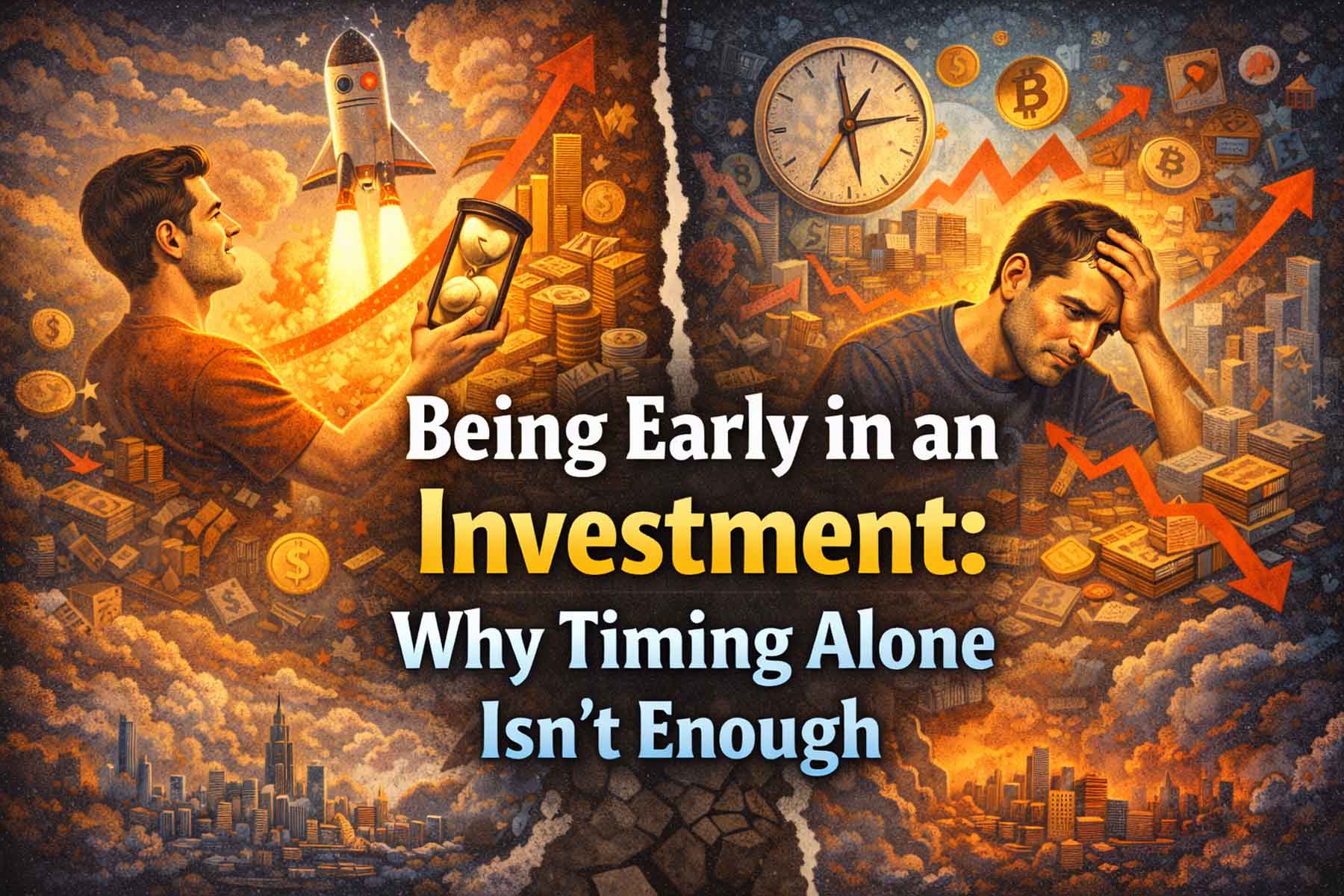
However, reality is more complicated. Entering an investment early does not guarantee profitability, stability, or long-term success. In many cases, being early simply means accepting uncertainty for a longer period of time. Without proper strategy and risk management, early entry can even amplify losses.
Understanding this distinction is important for building realistic expectations. Timing alone is not a substitute for sound decision-making.
What Being Early in an Investment Actually Means
Being early in an investment usually refers to entering a position before widespread market adoption or price appreciation. This can involve buying assets before they become popular or investing in emerging industries at an early stage.
While early entry can offer high potential upside, it also carries higher uncertainty. At early stages, information is limited, business models may be unproven, and market demand may still be unclear.
Therefore, being early is not inherently good or bad. Its value depends on how well risk is managed and how realistic expectations are set.
Why Being Early in an Investment Is Often Romanticized
The investing world tends to highlight success stories far more than failures. Wins are easy to share, memorable, and emotionally satisfying. Losses, long waiting periods, and missed opportunities rarely receive the same attention.
Over time, this imbalance shapes how people perceive early investing. It creates the impression that being early is a reliable shortcut to superior returns, when in reality it is closer to a filtering process—where only a few outcomes are visible, while the majority quietly disappear.
Survivorship Bias in Investment Narratives
This selective storytelling creates the illusion that early entry is a reliable path to success. Investors are exposed to outcomes, not probabilities.
The failed early investments—the ones that stalled, diluted, or never reached meaningful adoption—rarely become case studies. As a result, early investing appears far safer and more predictable than it actually is.
The Psychological Appeal of Early Market Entry
Being early provides emotional satisfaction that goes beyond financial expectations. It creates a sense of exclusivity—of being “ahead of the crowd.”
For many investors, this feeling quietly becomes part of their identity. Being early feels like proof of intelligence and insight. Unfortunately, this emotional reward often arrives long before any financial reward does, which can distort judgment during long periods of uncertainty.
Ego and Identity in Investment Decisions
This emotional attachment can prevent objective evaluation and increase exposure to unnecessary risk. Once ego becomes involved, selling or reassessing a position no longer feels like a decision—it feels like an admission of being wrong.
At that point, investors may defend the idea of being early more strongly than they evaluate the investment itself.
Investment Timing Versus Investment Quality
Many early investments fail not because they were early, but because the underlying project never developed the qualities required for long-term adoption.
Timing can amplify a good investment, but it cannot compensate for weak fundamentals. When quality is missing, being early simply extends the period of uncertainty rather than increasing the probability of success.
The Risk of Long Waiting Periods
One overlooked cost of being early is time—and not just in calendar years. Long waiting periods consume attention, emotional energy, and opportunity.
While capital may remain invested, focus becomes fragmented. Investors start monitoring progress that may never meaningfully accelerate, slowly normalizing stagnation as “part of the process.”
Opportunity Cost of Capital
Capital invested early may remain inactive for long periods. During this time, the same capital could have been allocated to more productive opportunities.
Opportunity cost is rarely visible, but it plays a major role in long-term portfolio performance. Being early in the wrong investment can delay overall financial progress.
Why Early Entry Often Increases Volatility Exposure
Early-stage investments typically experience higher volatility. Prices can fluctuate dramatically due to low liquidity, limited information, and market speculation.
This volatility tests emotional discipline. Many investors underestimate their tolerance for prolonged uncertainty. Without preparation, early market participation can lead to panic decisions and premature exits.
Volatility is not always negative, but it must be understood and managed properly.
The Difference Between Strategic Early Investing and Blind Speculation
Not all early investing is speculative. The difference lies in preparation and analysis.
Strategic Early Entry Requires Research
Strategic early investing involves understanding the industry, evaluating competitive advantages, and assessing long-term viability. It also requires diversification and position sizing to limit downside risk.
Blind speculation, on the other hand, relies on hype, social media trends, or emotional excitement. This approach often ignores fundamentals and increases the probability of loss.
How Market Cycles Affect Early Investors
Market cycles play a critical role in determining outcomes.
Early investors may enter during the early stages of a growth cycle, but they may also enter during periods of inflated expectations. In such cases, prices may decline even if long-term potential exists.
Understanding where the market stands within a broader cycle helps investors avoid unrealistic assumptions about future performance.
Why Being Early Does Not Replace Risk Management
Risk management remains essential regardless of timing.
Position Sizing and Portfolio Balance
Even promising early investments should not dominate a portfolio. Concentrated exposure increases vulnerability to unexpected outcomes.
Diversification, position limits, and regular portfolio reviews help protect against overconfidence and excessive risk concentration.
Without risk management, early investing becomes gambling rather than strategy.
Long-Term Investing Behavior and Early Entry
Long-term investing does not mean holding every early investment indefinitely. Investors should regularly reassess whether an investment still aligns with original expectations. If fundamentals change or progress stalls, adjusting positions may be necessary.
Flexibility is part of disciplined investing. Holding onto positions purely because of emotional attachment to being “early” can undermine long-term goals.
Building Realistic Expectations About Early Investing
Realistic expectations reduce emotional pressure. Early investing rarely produces immediate rewards. It often involves long periods of uncertainty and uneven progress. Understanding this reality prepares investors mentally and financially. When expectations are realistic, investors are better equipped to evaluate performance objectively and make rational adjustments when needed.
How to Evaluate Whether Early Entry Makes Sense
Before entering an investment early, investors should consider several factors:
- Strength of underlying fundamentals
- Market demand and scalability
- Competitive landscape
- Financial sustainability
- Personal risk tolerance
This evaluation helps separate informed decisions from impulsive speculation.
Conclusion
True investing success depends less on the pride of being early and more on the discipline of being right. Research quality, risk management, and emotional control play a far greater role than timing alone.
Investors who understand this shift their focus. Instead of asking how early they can enter, they ask whether an investment still makes sense if progress takes longer—or never materializes at all.
Frequently Asked Questions (FAQ)
Is being early always risky?
Being early involves higher uncertainty, but risk can be managed through diversification and proper analysis.
Can early investing produce higher returns?
Yes, but only when supported by strong fundamentals and long-term market adoption.
Why do investors chase early opportunities?
Many are influenced by success stories, social media trends, and emotional excitement.
What is the biggest danger of early investing?
Overconfidence and lack of risk management are the most common dangers.
How long should investors wait for early investments to mature?
There is no fixed timeline. Investors should evaluate progress against original expectations and market developments.
Should beginners avoid early-stage investments?
Beginners should approach early investments cautiously and prioritize education and diversification.
How can investors reduce emotional bias when entering early?
By using clear criteria, predefined rules, and structured review processes.