Invest Trand – Most of us don’t think of doing nothing as a financial decision. We tell ourselves we’re just waiting for the right time, more information, or a clearer situation. In reality, avoiding financial decisions is a decision—and often an expensive one.
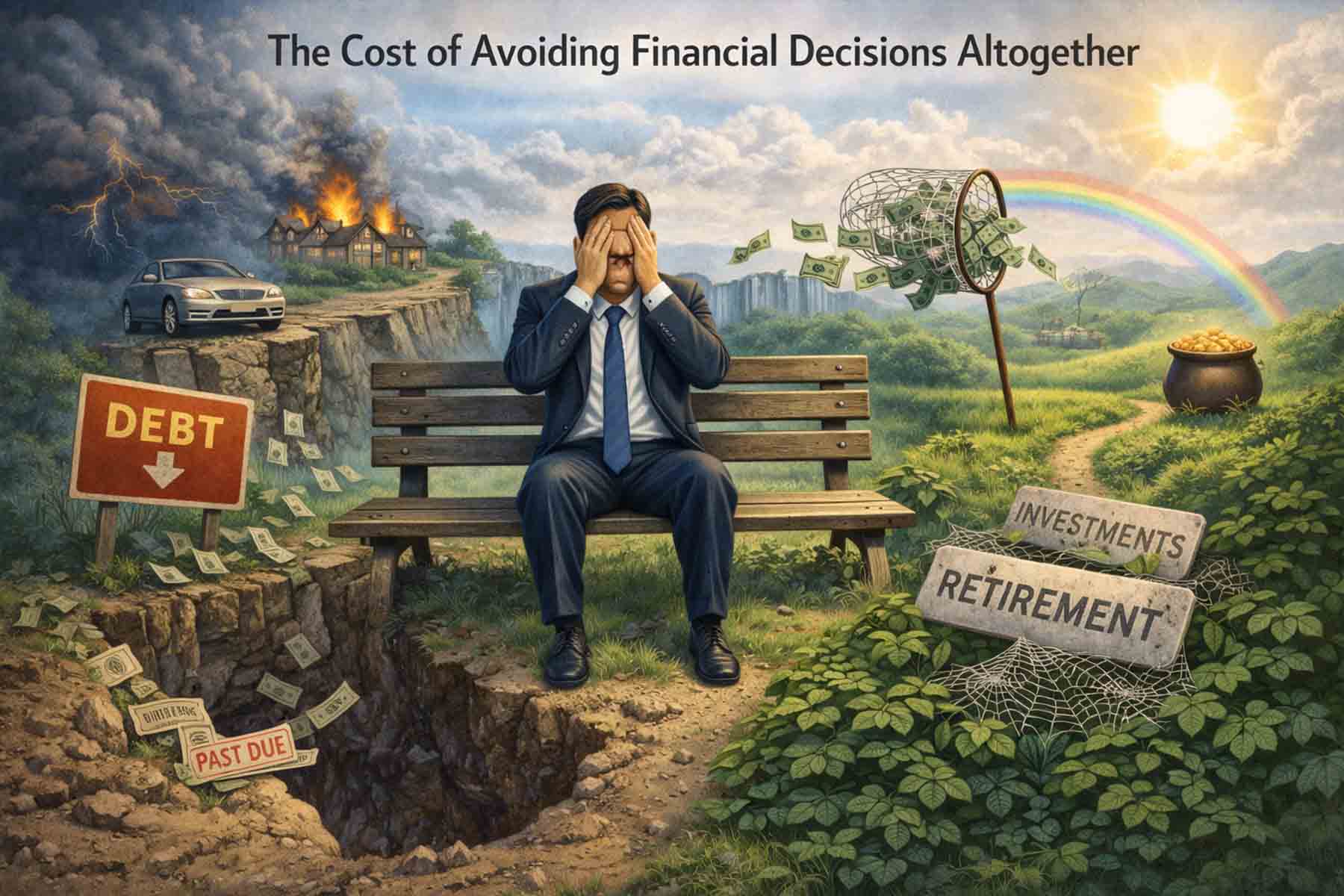
We’ve all been there. You postpone starting to invest because the possibilities seem overwhelming. You postpone reviewing your expenses because it is uncomfortable. From the outside, it looks like nothing is happening. Under the surface, though, your future is being shaped anyway.
Here’s the uncomfortable truth: while you avoid choosing, life keeps choosing for you. Inflation keeps moving. Opportunities come and go. Your responsibilities grow. And your financial structure slowly hardens into something that’s harder to change.
In this article, we want to talk honestly about the real cost of avoiding financial decisions altogether—why it feels safe, why it isn’t, and how you and we can start moving forward without needing to become financial superheroes overnight.
Why We Avoiding Financial Decisions in the First Place
If we’re honest, most of us don’t avoiding financial decisions because we’re lazy or irresponsible. We avoid them because money decisions touch something deeper: fear, uncertainty, and the pressure to get things “right.” When the stakes feel high, even simple choices can start to feel heavy.
Over time, this creates a strange habit. Instead of choosing, we postpone. Instead of simplifying, we let things stay messy. We tell ourselves we’ll deal with it when we have more time, more knowledge, or more confidence. The problem is, that moment rarely arrives on its own.
The Fear of Getting It Wrong
One of the biggest reasons we avoid money decisions is fear. We’re afraid of making a mistake. Afraid of choosing the wrong investment. Afraid of locking ourselves into something we’ll regret. So instead of choosing imperfectly, we choose not to choose at all.
It feels logical. If you don’t act, you can’t mess up, right? The problem is that this logic ignores a crucial fact: not acting has consequences too. They’re just quieter and slower, which makes them easier to ignore.
When fear drives our finances, we often mistake inaction for safety. In reality, we’re just choosing a different kind of risk—one that compounds quietly over time.
Decision Fatigue and Overwhelm
Modern personal finance is noisy. There are endless opinions, products, strategies, and “expert” advice. For many people, this creates paralysis. When everything feels complicated, doing nothing feels like relief.
We get tired of comparing, researching, and second-guessing ourselves. So we postpone decisions. “I’ll deal with this later,” becomes a habit. Weeks turn into months. Months turn into years.
The irony is that avoiding decisions doesn’t reduce mental load in the long run. It increases it. Unresolved financial choices sit in the back of your mind, quietly draining energy and attention.
The Hidden Costs of Doing Nothing
Doing nothing with money often feels harmless. There’s no obvious mistake, no dramatic loss, no moment where everything breaks. From the outside, it even looks calm and responsible. But financially, inaction is rarely neutral.
When we defer making judgments, we do not freeze our circumstance; rather, we allow it to drift over time. Time passes, prices fluctuate, and our obligations rise. The cost of doing nothing is not presented as a single major issue. It manifests as squandered opportunities, poor growth, and fewer options than we could have had. And that’s why it’s so simple to underestimate—and so pricey in the end.
Lost Time Is Lost Leverage
Time is one of the few advantages regular people have in building financial stability. Whether it’s saving, investing, or paying down debt, starting earlier usually matters more than starting perfectly.
When we avoid decisions, we don’t just delay progress—we lose leverage. A year of hesitation isn’t neutral. It’s a year where compounding didn’t work for you, where habits didn’t improve, where systems didn’t get built.
You and we can’t buy back time. We can only decide what to do with the time that’s left.
Opportunities Don’t Wait for Clarity
Many people tell themselves they’ll act when things are “more certain.” The problem is that certainty is rare, especially in money. There will almost always be risks, unknowns, and trade-offs.
While we wait for perfect clarity, opportunities pass. None of these require perfect timing—just enough courage to move.
Avoiding decisions often means letting circumstances decide for us. And circumstances don’t care about our long-term goals.
How Indecision Shapes Your Financial Life
Indecision doesn’t just delay progress—it quietly shapes the direction of your entire financial life. When choices are constantly postponed, your situation doesn’t stay the same. It slowly moves in whatever direction is easiest, not necessarily in the direction you actually want.
Over time, this creates patterns. You keep the same habits, the same setup, and the same compromises, not because they’re ideal, but because changing them feels uncomfortable. Little by little, indecision turns into a lifestyle. And before you realize it, many of your financial outcomes aren’t the result of clear choices, but of choices you never made.
You Drift Into Default Paths
When you don’t choose intentionally, you follow defaults. Defaults are powerful because they don’t require effort. But they also rarely align perfectly with what you actually want. Over time, your life becomes a collection of “this just kind of happened” choices.
We don’t wake up one day with a financial life we hate. We drift into it by not choosing differently earlier.
Small Delays Turn Into Big Constraints
Postponing one decision rarely feels dramatic. Each delay seems harmless.
But delays stack. And when they do, your room to maneuver shrinks. Fixed costs grow. Commitments harden. Changing direction becomes more expensive and more stressful.
Avoiding decisions doesn’t keep your options open. It often does the opposite—it quietly closes them.
The Emotional Price of Avoidance
Background Stress You Get Used To
Unmade decisions create a special kind of stress: low-level, constant, and easy to normalize. You might not panic about your finances every day, but there’s a persistent sense that something isn’t quite under control.
This background stress affects how you think, how you sleep, and how you plan. It makes future decisions feel heavier, which leads to more avoidance. It’s a loop that feeds itself.
We don’t need perfect finances to feel calmer. We usually just need clarity and direction.
Erosion of Confidence
Every time you avoid a decision, you reinforce a story about yourself: “I’m not good with money,” or “This is too complicated for me.” Over time, that story becomes part of your identity.
The more you avoid, the harder it feels to start. Not because the decisions get objectively harder, but because your confidence gets weaker.
Ironically, making small, imperfect decisions is often the fastest way to rebuild trust in yourself.
The Myth of the “Right Time”
Why Waiting Feels Responsible
Waiting can look mature. It can feel like you’re being cautious and thoughtful. And sometimes, waiting is the right move—when you’re actively gathering information or preparing for a better choice.
But there’s a difference between strategic patience and passive avoidance. One moves you forward. The other just delays discomfort.
If you’re honest with yourself, you can usually tell which one you’re doing.
Progress Beats Perfection
There is rarely a perfect financial decision. There are only decisions with trade-offs. When we accept that, something interesting happens: action becomes easier.
We build better financial lives by adjusting course, not by waiting forever at the starting line.
How to Start Making Decisions Without Freezing
Shrink the Decision
Big financial decisions feel scary because we imagine them as permanent and irreversible. In reality, most decisions are adjustable.
Instead of asking, “What’s the perfect long-term strategy?” try asking, “What’s a small step I can test for the next three months?” Smaller decisions are easier to make and easier to correct.
Create Simple Rules
Rules reduce mental load. For example: “I save before I spend,” or “I review my finances once a month,” or “I don’t add new fixed expenses lightly.” These aren’t complex strategies, but they create direction.
When you and we rely less on willpower and more on simple systems, avoidance loses its grip.
Accept Imperfect Action
You will make some suboptimal choices. Everyone does. That’s not a sign you failed—it’s a sign you’re actually playing the game.
The real failure is staying stuck because you’re afraid to move.
What Choosing Does for Your Future
Choices Create Momentum
Once you start making decisions, something shifts. You stop feeling like money is just happening to you. You start feeling like you’re participating in shaping your own future.
Momentum builds confidence. Confidence makes the next decision easier. And slowly, the entire tone of your financial life changes.
Clarity Is More Valuable Than Comfort
Avoidance often feels comfortable in the short term. But clarity—even when it’s uncomfortable—is what creates long-term stability.
When you know where you stand and where you’re going, stress decreases. Not because everything is perfect, but because nothing is vague anymore.
Conclusion
Avoiding financial decisions altogether might feel safe, but it comes with real costs: lost time, fewer options, more stress, and a future shaped by defaults instead of intention.
You and we don’t need to become fearless or perfect. We just need to become a little more willing to choose, adjust, and keep moving. Small decisions, made consistently, beat perfect decisions that never happen.
In the end, your financial life will be shaped either by your choices or by your avoidance. One gives you agency. The other gives you drift. And only one of those truly expands your options.