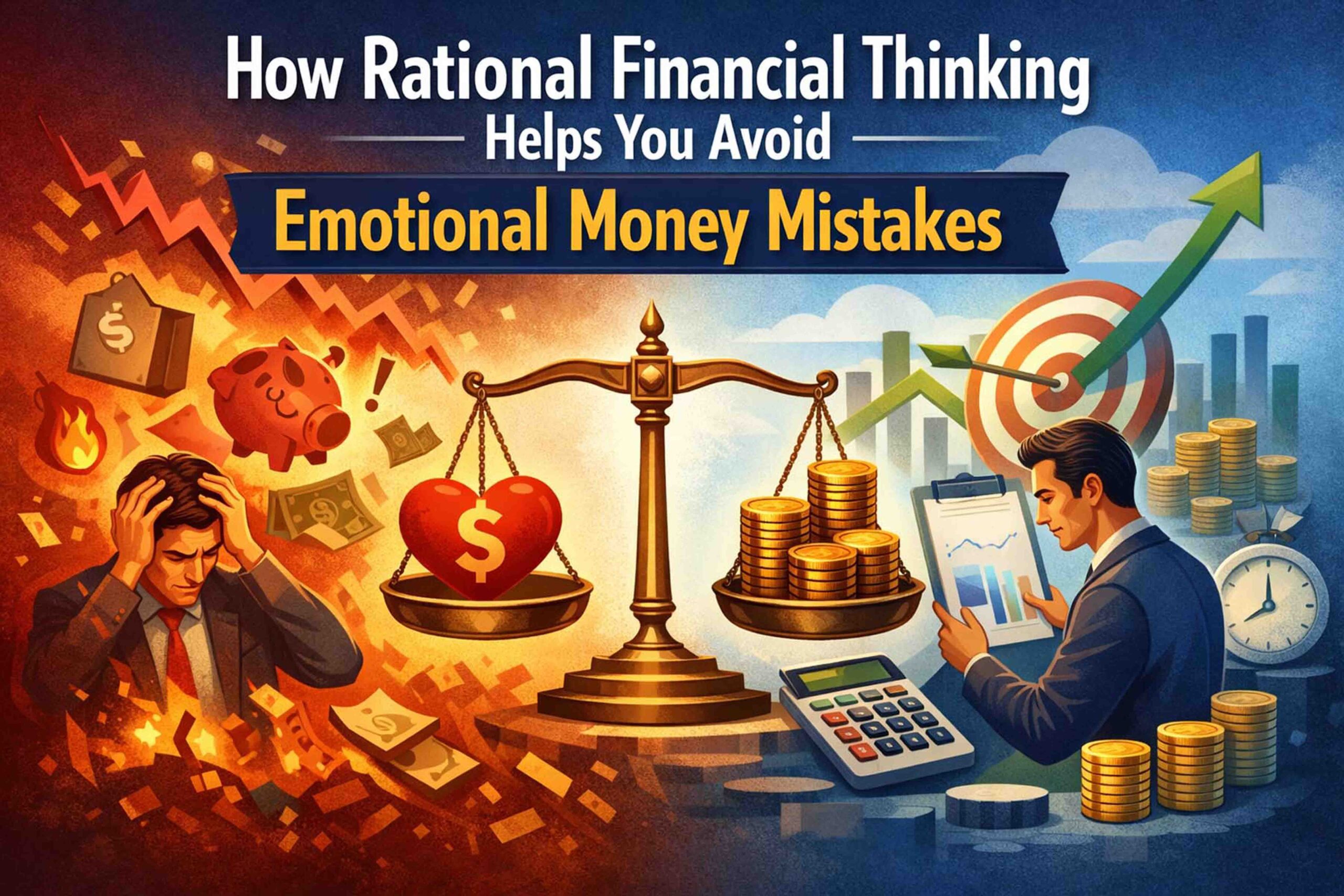
Investrand.biz.id – Money decisions rarely happen in a calm, neutral environment. They often occur during moments of stress, excitement, fear, or pressure. These emotional states strongly influence behavior, even when people believe they are acting logically. Many financial mistakes are not caused by a lack of knowledge. They happen because emotions override judgment. Rational financial thinking does not remove emotion from money decisions, but it creates a structure that prevents emotions from controlling outcomes.
When people learn to think rationally about money, they shift from reacting to situations toward evaluating them. This shift improves consistency, reduces regret, and supports long-term stability.
What Rational Financial Thinking Actually Means
Rational financial thinking is not about being cold or detached. It is about recognizing emotional influence and creating distance between feelings and actions.
It involves asking structured questions before making decisions. Instead of reacting immediately, rational thinkers evaluate consequences, probabilities, and long-term impact.
This approach prioritizes reasoning over impulse. It does not eliminate mistakes, but it reduces the frequency of emotionally driven errors.
Why Emotional Money Decisions Are So Common
Emotions are deeply connected to money. Financial outcomes affect security, status, and self-worth.
How Fear and Excitement Shape Behavior
Fear pushes people to avoid losses, sometimes leading to overly conservative decisions. Excitement encourages risk-taking, often without proper evaluation.
Both emotions distort perception. think rationally about money creates awareness of these patterns and encourages pause before action.
Without this awareness, people repeat emotional cycles that produce unstable outcomes.
How Rational Financial Thinking Improves Financial Self-Control
Self-control is often described as willpower. In finance, structure matters more than motivation.
Rational financial thinking introduces systems that reduce emotional exposure. Examples include setting clear rules for spending, defining investment criteria, and automating decisions where possible.
When structure replaces impulse, behavior becomes more predictable. This predictability supports long-term consistency.
Rational Financial Thinking and Better Decision Timing
Timing decisions emotionally often leads to regret. Acting during panic or excitement usually produces poor outcomes.
Why Waiting Is Sometimes the Best Decision
Rational financial thinking recognizes that not every situation requires immediate action. Waiting allows emotions to settle and information to become clearer.
This delay does not mean inaction. It means choosing timing based on clarity rather than pressure.
Over time, this habit reduces impulsive mistakes and improves overall decision quality.
How Rational Financial Thinking Reduces Financial Stress
Stress increases when people feel uncertain about their decisions. Emotional choices often lead to second-guessing and regret.
Rational financial thinking creates confidence rooted in reasoning. Even when outcomes are not perfect, people trust the process behind their decisions.
This trust lowers anxiety and improves emotional stability. Money becomes a managed resource rather than a constant source of tension.
Rational Financial Thinking and Risk Awareness
Risk is unavoidable in financial life. The problem is not risk itself, but misunderstanding it.
Viewing Risk Through Probability Instead of Emotion
Emotional reactions exaggerate both danger and opportunity. rational financial focuses on likelihood and impact rather than extreme scenarios.
This perspective encourages balanced decisions. People avoid unnecessary risk while remaining open to reasonable opportunities.
Understanding risk as a spectrum rather than a binary outcome improves judgment.
Why Rational Financial Thinking Prevents Repeated Mistakes
Many people repeat the same financial errors because they do not analyze their behavior patterns.
Rational thinkers review decisions objectively. They identify triggers that lead to impulsive spending, poor timing, or emotional reactions.
By recognizing these patterns, they adjust behavior proactively instead of reacting after mistakes occur.
Why Rational Financial Thinking Is a Long-Term Advantage
Financial environments change constantly. Strategies evolve, markets fluctuate, and personal circumstances shift.
What remains valuable is the ability to think clearly under pressure. Rational financial adapts to change without losing direction.
It does not guarantee perfect outcomes, but it significantly improves consistency, stability, and confidence. Over the long term, this mindset becomes one of the strongest advantages in personal finance.
Conclusion
Rational financial thinking is not about becoming emotionless. It is about building awareness and structure around decisions that affect long-term stability. In a world where financial information moves fast and emotional pressure is constant, the ability to pause and evaluate becomes increasingly valuable.
When people rely on impulse, money becomes unpredictable. When they rely on reasoning, money becomes manageable. Rational thinking helps transform financial behavior from reactive to intentional.
Over time, this shift creates more than better outcomes. It builds confidence, reduces stress, and encourages consistency. Instead of chasing quick wins or avoiding fear, people begin to focus on sustainable progress.
Ultimately, rational money thinking isn’t a strategy. It is a mindset that supports every financial decision, from daily spending to long-term planning. Those who develop it gain a lasting advantage that adapts to change rather than being controlled by it.
Frequently Asked Questions (FAQ)
What is the main goal of rational financial thinking?
The main goal is to improve decision quality. Rational financial thinking helps people evaluate situations logically instead of reacting emotionally.
Can rational money thinking eliminate emotional reactions?
No. Emotions cannot be removed completely. However, rational thinking helps people recognize emotions and prevent them from controlling financial behavior.
Is rational financial thinking only useful for investing?
No. It applies to spending, saving, budgeting, debt management, and career-related financial decisions.
How can someone start practicing rational financial thinking?
By pausing before making decisions, asking structured questions, and reviewing past financial choices to identify emotional patterns.
Does rational financial thinking guarantee better financial results?
It does not guarantee outcomes, but it significantly improves consistency and reduces avoidable mistakes.
Why do people struggle to stay rational with money?
Because money is tied to security, identity, and social comparison. These emotional factors often override logical reasoning.
Can rational money thinking reduce financial stress?
Yes. When decisions are based on reasoning instead of impulse, people feel more confident and experience less uncertainty-related anxiety.
Is rational financial thinking a skill or a personality trait?
It is a skill. Anyone can improve it through practice, reflection, and experience.
How does rational financial thinking help during economic uncertainty?
It encourages people to focus on probability, long-term direction, and structured planning instead of panic reactions.
What is the biggest mistake people make without rational financial thinking?
The biggest mistake is making repeated emotional decisions without learning from past outcomes, which leads to unstable financial behavior.