Long-term investing is one of the most common phrases in personal finance. It appears in books, blogs, social media posts, and financial advice videos. The phrase sounds simple and responsible. It suggests patience, discipline, and maturity.
Yet despite its popularity, few people actually understand what long-term investing truly involves. Many repeat the phrase without knowing how it should affect real decisions. As a result, investors often feel confused when outcomes do not match expectations.
The problem is not the concept itself. The problem is how loosely it is used. Without proper explanation, “long-term investing” becomes a vague slogan instead of a practical framework. This misunderstanding shapes behavior, expectations, and emotional reactions in ways that are rarely discussed.
What Long-Term Investing Really Means
Long-term investing is not simply about holding assets for many years. It is about aligning decisions with a clearly defined time horizon and financial objective.
True long-term investing requires understanding why money is invested, how long it is expected to remain invested, and what level of risk is acceptable during that period. Without these elements, time alone does not make a strategy long-term.
Many people assume that buying and holding automatically qualifies as long-term investing. In reality, long-term investing is a mindset supported by planning, patience, and realistic expectations.
Why the Term Long-Term Investing Is So Popular
The phrase “long-term investing” is attractive because it sounds safe and responsible. It offers reassurance during uncertainty and market volatility.
Simplicity Makes the Concept Easy to Market
Financial content often simplifies complex ideas. Saying “think long term” is easier than explaining time horizons, risk tolerance, and strategy alignment. This simplicity helps content spread quickly, but it removes important context. As a result, people adopt the phrase without adopting the discipline behind it. They believe they are investing long term, while their behavior remains reactive and short-term focused.
How Long-Term Investing Becomes a Vague Label
Without clear definitions, long-term investing becomes a flexible label that can mean different things to different people.
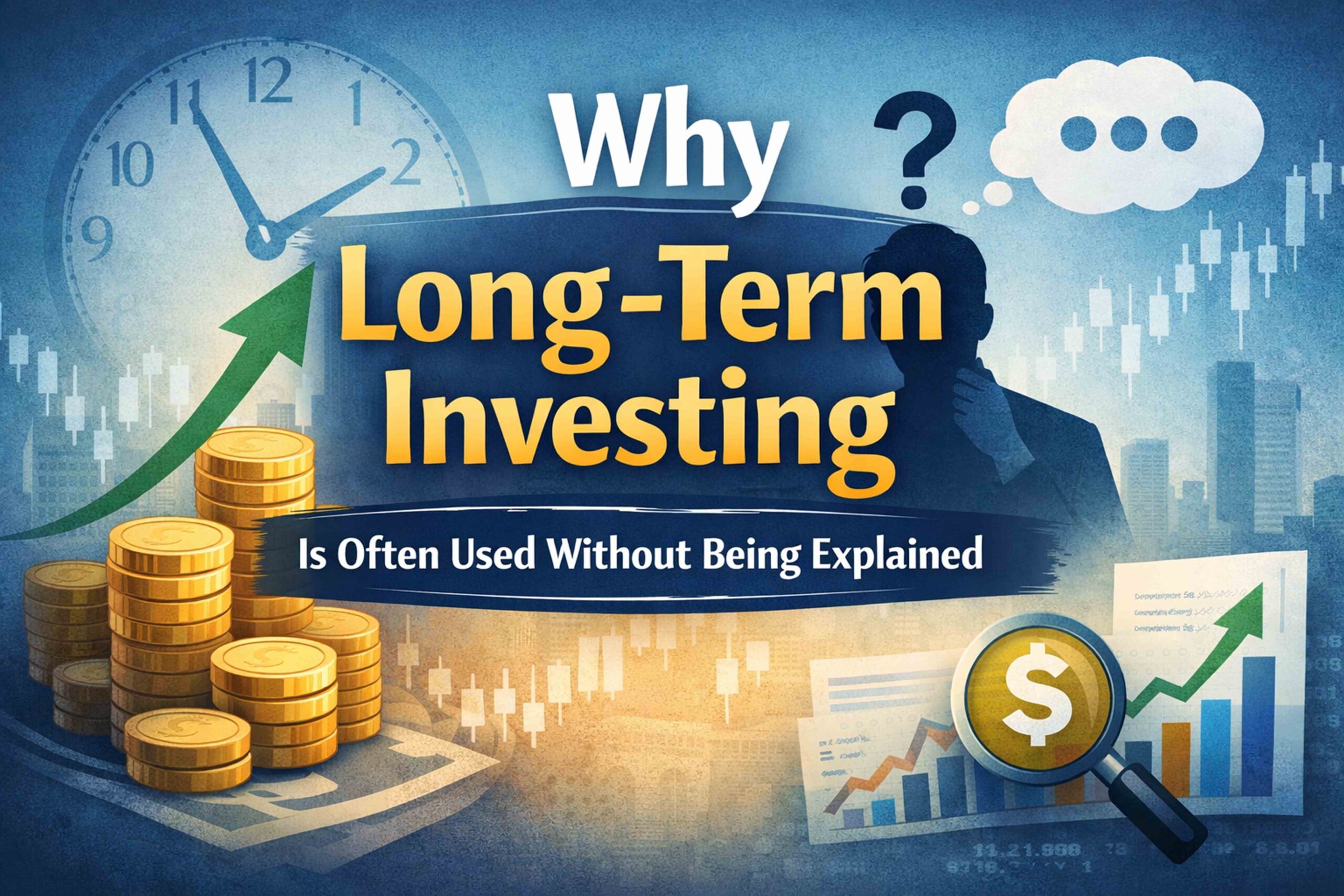
Some consider three years long-term. Others think ten years is the minimum. Without clarity, expectations become inconsistent. Investors may believe they are following a long-term approach while constantly changing strategies.
This confusion leads to frustration. When results do not appear quickly, people question the concept itself rather than their interpretation of it.
The Role of Time Horizon in Long-Term Investing
A time horizon represents the practical timeframe that determines how long capital can remain invested before it must be used. This element is central to long-term investing because it influences asset selection, risk exposure, and portfolio structure. Without a defined time horizon, investors often make inconsistent decisions, switching strategies based on short-term market movements rather than long-term financial objectives. Establishing a clear timeline helps align expectations with reality and provides a stable framework for evaluating performance over time.
Why Time Horizon Is Often Ignored
Many investors focus on returns without considering when they will actually use the money. Without a clear timeline, decisions become emotionally driven. A proper long-term investing approach begins by identifying goals such as retirement, education funding, or wealth preservation. These goals determine the appropriate time horizon and influence risk tolerance. Ignoring this step weakens the entire strategy.
How Misunderstanding Long-Term Investing Affects Behavior
When people misunderstand long-term investing, their actions often contradict their intentions. They may panic during short-term market declines, even though their investment horizon is long. They may also chase trends because they confuse patience with passivity. This mismatch between belief and behavior creates emotional stress and inconsistent results.
The Risk of One-Size-Fits-All Narratives
Not everyone has the same financial situation. Income stability, age, responsibilities, and goals differ widely. When long-term investing is presented as a universal solution, people may apply strategies that do not match their circumstances. This mismatch increases risk and dissatisfaction. A realistic approach requires customization rather than blind adoption.
Long-Term Investing and Emotional Discipline
Emotional discipline is a core component of long-term investing.
Investors must resist the urge to react to short-term news, social pressure, and market noise. This discipline does not come automatically. It must be developed through awareness and experience.
Those who understand the emotional demands of long invest are better prepared to stay consistent during uncertainty.
Why Long-Term Investing Needs Better Explanation
The concept of long-term investing is valuable, but only when properly understood. Clear explanations help investors set realistic expectations, define goals, and develop appropriate strategies. Without clarity, the phrase becomes empty and misleading. Education should focus not only on what long-term investing is, but also on what it is not. This distinction prevents disappointment and strengthens decision-making.
Conclusion
Long-term investing is more than a popular slogan. It is a structured approach that requires clear goals, realistic expectations, and emotional discipline. When the concept is used without explanation, people adopt the label without adopting the behavior. This gap leads to confusion, stress, and inconsistent outcomes.
By understanding what long-term investing truly involves, investors can align their actions with their intentions. Instead of reacting to short-term noise, they can focus on sustainable progress and financial stability over time. Ultimately, the value of long invest comes not from repeating the phrase, but from applying its principles correctly and consistently.
Frequently Asked Questions (FAQ)
What is the main purpose of long-term investing?
The main purpose is to build wealth gradually by allowing time and compounding to work together while reducing the impact of short-term market fluctuations.
How long is considered “long term” in investing?
There is no universal number. It depends on financial goals and personal circumstances. For many investors, it ranges from five to twenty years or more.
Is long-term investing suitable for everyone?
Not always. People with short-term financial needs or unstable income may require different strategies. Personal context matters.
Does long-term investing guarantee profits?
No. It reduces certain risks but does not eliminate uncertainty. Market conditions and economic factors still influence outcomes.
Why do people panic even when they claim to invest long term?
Because emotional discipline is difficult. Without clear understanding and expectations, short-term losses feel more significant than they should.
Can long-term investing work without regular monitoring?
No. While it does not require constant trading, periodic review is important to maintain alignment with goals and risk tolerance.