Invest Trand – Patience is one of the most celebrated virtues in investing. Almost every financial book and advisor encourages investors to “stay patient” and “think long term.” While this advice is generally sound, it often hides an important distinction. There is a difference between disciplined patience and careless inactivity.
Many investors believe that once money is invested, the best action is no action at all. Over time, this mindset can quietly transform patience into passive neglect. Instead of building wealth steadily, investors may unknowingly allow inefficiencies, misalignment, and unnecessary risk to grow inside their portfolios.
Understanding this difference is critical. Patience should support long-term strategy, not replace responsibility. Without awareness and structure, even well-intentioned investors can fall into habits that weaken their financial outcomes.
What Patience in Investing Actually Means
Patience in investing does not mean ignoring your investments. It means resisting emotional reactions to short-term market fluctuations while staying committed to a long-term plan.
True patience is intentional. It involves trusting a strategy that is built on realistic assumptions, diversified assets, and clear goals. This form of patience allows investors to avoid panic selling and impulsive trading, both of which often lead to losses.
However, patience becomes problematic when it is misunderstood as permanent inaction. Without periodic evaluation and adjustment, even a well-designed portfolio can drift away from its original purpose.
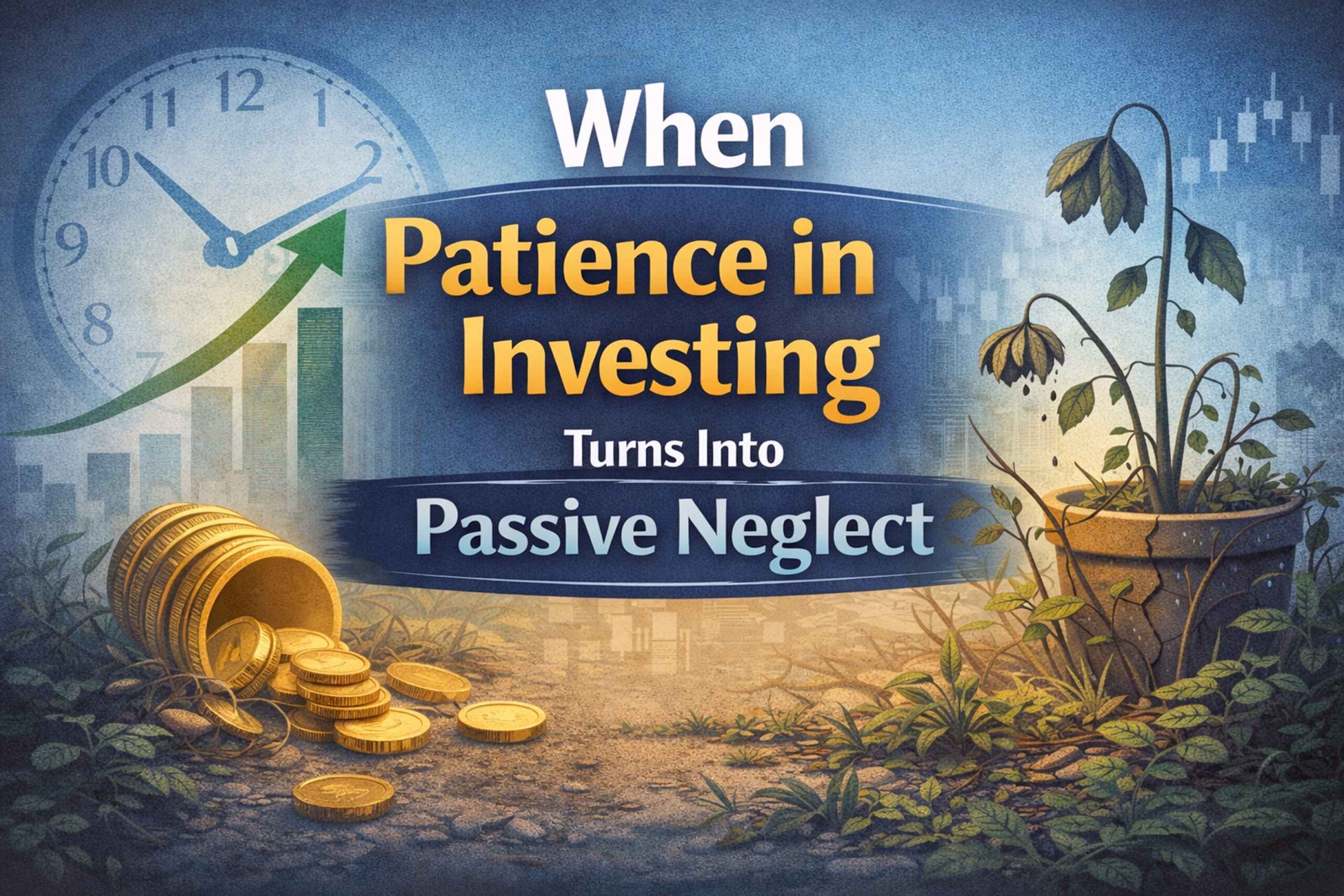
How Patience in Investing Turns Into Passive Neglect
Passive neglect occurs when investors stop paying attention altogether. They confuse discipline with detachment and assume that time alone will fix all financial decisions.
This behavior usually develops slowly. At first, investors feel confident because markets are stable or growing. Over time, they become less engaged. They stop reviewing allocations, ignore changes in personal circumstances, and delay important adjustments.
Eventually, the portfolio no longer reflects the investor’s goals or risk tolerance. What started as patience quietly becomes neglect.
Comfort Can Create Complacency
When investments perform well, comfort sets in. Positive returns create a false sense of security. Investors may assume that success will continue automatically.
This complacency reduces motivation to review strategies or rebalance assets. As a result, portfolios can become overweight in certain sectors or asset classes, increasing exposure to hidden risks.
The Psychological Trap Behind Passive Investing Behavior
Human psychology plays a major role in passive neglect. Many investors avoid monitoring their portfolios because it feels stressful or complicated.
Avoidance Behavior in Financial Decision Making
Some people avoid checking their investments because they fear negative outcomes. Others feel overwhelmed by financial terminology and data. This avoidance creates a mental shortcut: “If I don’t look at it, it will handle itself.”
Unfortunately, ignoring financial responsibilities does not remove risk. It only delays awareness until problems become larger and harder to fix.
Why Long-Term Discipline Requires Active Awareness
Long-term investing is not about constant trading, but it does require awareness. Active awareness means understanding what you own, why you own it, and how it fits into your overall financial plan.
This process includes:
- Reviewing portfolio performance periodically
- Checking asset allocation balance
- Adjusting contributions based on income changes
- Reassessing goals as life evolves
These actions do not violate patience. They strengthen it.
The Difference Between Strategic Holding and Blind Holding
Holding investments for the long term is a strategy. Blind holding is not. Strategic holding is based on clear reasoning. Investors know the role each asset plays and understand the expected risk and return profile. Conversely, loss of ownership occurs when an asset is held simply because it was purchased in the past.
Over time, market conditions change. Industries evolve. Personal needs shift. Without strategic evaluation, blind holding can lock investors into outdated positions that no longer serve their goals.
How Passive Neglect Impacts Portfolio Performance
Passive neglect does not always produce immediate damage. Its effects accumulate gradually.
Hidden Costs of Inactivity
Some common consequences include:
• Portfolio imbalance
• Increased concentration risk
• Missed opportunities for tax optimization
• Declining alignment with financial goals
These issues reduce efficiency and weaken long-term performance without creating obvious warning signs.
Patience in Investing and Risk Management
Risk management is often ignored when patience is misunderstood. Investors assume that holding longer automatically reduces risk. While time can smooth volatility, it does not eliminate fundamental risks.
Proper risk management requires periodic evaluation. This includes understanding how market changes affect asset correlations and adjusting exposure when necessary.
Patience should support risk control, not replace it.
Building a Healthy Long-Term Investment Discipline
Healthy discipline balances consistency with awareness. It allows investors to stay focused on long-term goals while remaining flexible enough to adapt.
Creating Simple Review Systems
One effective approach is setting regular review schedules. Quarterly or semi-annual portfolio checkups help maintain alignment without encouraging emotional trading.
During these reviews, investors should evaluate performance, contribution levels, and allocation balance. This creates structure without sacrificing patience.
Why Education Prevents Passive Neglect
Education plays a key role in preventing neglect. Investors who understand basic financial concepts feel more confident managing long-term strategies. Learning about diversification, compounding, and risk allocation reduces fear and uncertainty. With better knowledge, investors are more likely to engage responsibly instead of avoiding financial decisions.
Conclusion
Patience in investing is powerful, but only when combined with awareness and structure. When patience becomes passive neglect, it weakens portfolios and increases hidden risks.
Long-term success depends on intentional behavior. Investors must remain emotionally calm during volatility while staying actively engaged with their financial plans. This balance transforms patience from a passive mindset into a productive discipline.
By building review habits, maintaining education, and aligning strategies with changing life circumstances, investors can protect their long-term goals without falling into complacency. True patience is not about doing nothing. It is about doing the right things consistently over time.
Frequently Asked Questions (FAQ)
Is patience always beneficial in investing?
Patience is beneficial when supported by strategy and monitoring. Without structure, it can become harmful inactivity.
How often should long-term investors review portfolios?
Most long-term investors benefit from quarterly or semi-annual reviews to ensure alignment with goals.
What is passive neglect in investing?
Passive neglect occurs when investors stop monitoring and adjusting portfolios, assuming time alone will solve problems.
Can passive investing still require active management?
Yes. Passive investing strategies still require periodic rebalancing and performance evaluation.
Why do investors avoid checking their investments?
Common reasons include fear of losses, lack of financial knowledge, and emotional discomfort with uncertainty.
Does holding investments longer always reduce risk?
Not necessarily. Time can reduce volatility but does not eliminate market or structural risks.
How can beginners avoid passive neglect?
Beginners should set simple review routines, educate themselves, and track goals consistently.