Invest Trand – Investment theory is built on a foundation of logic, models, and mathematical assumptions. My theory explains how markets function, how portfolios should be constructed, and how risk can be managed stably. On paper, these ideas appear clear and structured.
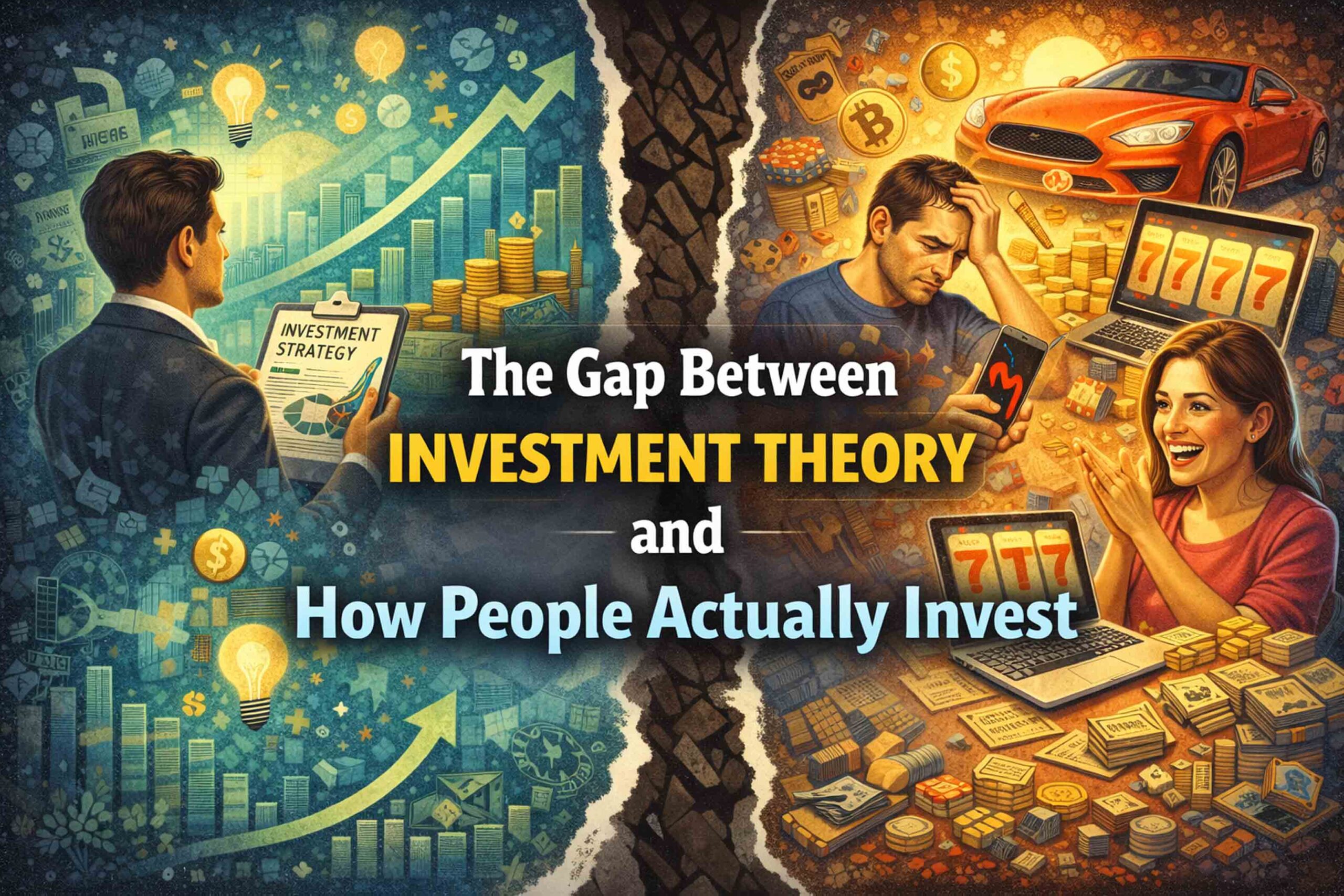
In reality, most investors do not behave according to theoretical models. Emotions, habits, social influence, and personal circumstances shape financial decisions in ways that theory often fails to predict. This disconnect creates a gap between what should happen and what actually happens.
Understanding this gap is essential. When investors recognize the limitations of theory and the realities of human behavior, they can build strategies that are more realistic, resilient, and sustainable over the long term.
What Investment Theory Is Designed to Explain
Investment theory focuses on creating rational frameworks for decision making. It aims to optimize returns while controlling risk through diversification, asset allocation, and statistical modeling.
Many theories assume that investors act logically, process information objectively, and make decisions based on probabilities rather than emotions. These assumptions help simplify complex markets into manageable models.
However, financial markets are not driven by numbers alone. They are driven by people. And people rarely behave in perfectly rational ways.
Why Investment Theory Often Fails in Real-World Conditions
In real-world investing, conditions are rarely stable or predictable. Economic shocks, political events, and unexpected personal circumstances disrupt even the most carefully designed plans.
Theory Assumes Rational Behavior
Most investment models assume that investors react calmly to market changes. In practice, fear and greed dominate behavior during periods of volatility. Panic selling during downturns and aggressive buying during market peaks are common patterns that contradict theoretical expectations.
This emotional response creates inefficiencies that theory does not fully account for.
How Investor Behavior Creates the Reality Gap
Investor behavior is influenced by psychological biases. These biases affect perception, judgment, and risk assessment.
Emotional Decision Making in Financial Markets
Many investors make decisions based on short-term emotions rather than long-term objectives. When markets rise, optimism increases risk-taking behavior. When markets fall, fear encourages withdrawal and loss avoidance. Read More: Most People Start Investing
These emotional cycles distort performance and often lead to buying high and selling low, which directly contradicts rational investment principles.
The Difference Between Academic Models and Personal Finance Reality
Academic models are built for controlled environments. Personal finance operates in unpredictable conditions.
Real investors face:
- Income fluctuations
- Unexpected expenses
- Life transitions
- Changing priorities
These factors influence investment decisions far more than theoretical assumptions. As a result, strategies must adapt to real-life constraints rather than idealized scenarios.
Why Simplicity Often Beats Complexity in Real World Investing
Complex strategies may perform well in simulations, but they are difficult to maintain consistently.
Behavioral Simplicity Improves Consistency
Simple investment systems are easier to follow. When strategies are easy to understand, investors are more likely to stick with them during volatile periods. Consistency is more important than theoretical perfection. A simple plan executed consistently often outperforms a complex strategy that is abandoned under pressure.
The Role of Social Influence on Investment Decisions
Investment theory rarely accounts for social pressure. In reality, investors are heavily influenced by media trends, online communities, and peer behavior.
When everyone talks about a particular asset or market opportunity, fear of missing out increases. This social influence can override rational analysis and push investors into crowded trades with higher risk.
Understanding this influence helps investors recognize external pressure and avoid impulsive decisions.
How Market Volatility Exposes the Theory-Reality Gap
Volatility is where theory and reality diverge most clearly.
Stress Testing Emotional Discipline
During market downturns, theoretical advice encourages investors to stay invested and remain disciplined. In practice, many investors struggle to follow this guidance.
Loss aversion makes declines feel more painful than equivalent gains feel rewarding. This emotional imbalance often leads to premature selling and long-term underperformance.
Why Financial Education Alone Is Not Enough
Education improves awareness, but it does not automatically change behavior. Many investors understand basic concepts such as diversification and long-term investing. However, knowledge does not eliminate emotional reactions. Behavioral habits must be developed alongside technical knowledge. Without practical systems and routines, education remains theoretical rather than actionable.
Bridging the Gap Between Investment Theory and Practice
Closing the gap requires combining rational frameworks with behavioral awareness.
Designing Behavior-Friendly Investment Systems
Effective investment systems account for human limitations. They include:
- Automated contributions
- Predefined rebalancing schedules
- Clear goal tracking
- Simple performance metrics
These systems reduce emotional interference and encourage long-term consistency.
Why Long-Term Success Depends on Behavioral Alignment
Investment success is not determined only by strategy selection. It depends on the ability to follow that strategy through different market cycles. Aligning investment plans with personal habits, emotional tolerance, and lifestyle constraints increases the likelihood of long-term success. When strategy and behavior are working together, investors will be better prepared to face uncertainty without losing sight of their goals and that is clearly my saying.
The Importance of Realistic Expectations
Unrealistic expectations widen the gap between theory and reality. Many investors expect smooth returns and steady growth. When markets behave differently, disappointment leads to poor decisions. Setting realistic expectations prepares investors for volatility and reduces emotional stress. It creates mental resilience that supports long-term discipline.
Conclusion
Investment theory provides valuable frameworks, but it cannot replace real-world experience and behavioral awareness. The gap between theory and practice exists because financial decisions are made by people, not machines.
Successful investors recognize this reality. They build strategies that account for emotions, habits, and changing life circumstances. By combining rational planning with behavioral discipline, investors can transform abstract theory into practical, sustainable investing.
Understanding this gap does not weaken investment theory. It strengthens it by making it more applicable to real financial life.
Frequently Asked Questions (FAQ)
What is investment theory?
Investment theory refers to academic frameworks that explain how markets function and how portfolios can be optimized for risk and return.
Why does real-world investing differ from theory?
Because real investors are influenced by emotions, social pressure, and unpredictable life events that theory cannot fully model.
Is investment theory still useful for individual investors?
Yes. This provides structure and guidance, but must be tailored to personal behavior and financial circumstances.
How can investors reduce emotional decision making?
By using automated systems, setting clear rules, and limiting exposure to short-term market noise.
Does following theory guarantee better results?
No. Results depend on consistency, discipline, and behavioral alignment in addition to strategy design.
What role does behavioral finance play in investing?
Behavioral finance studies how psychological factors influence investor behavior and market outcomes.
Can simple strategies outperform complex ones?
Yes. Simple strategies followed consistently often produce better long-term results than complex systems abandoned.