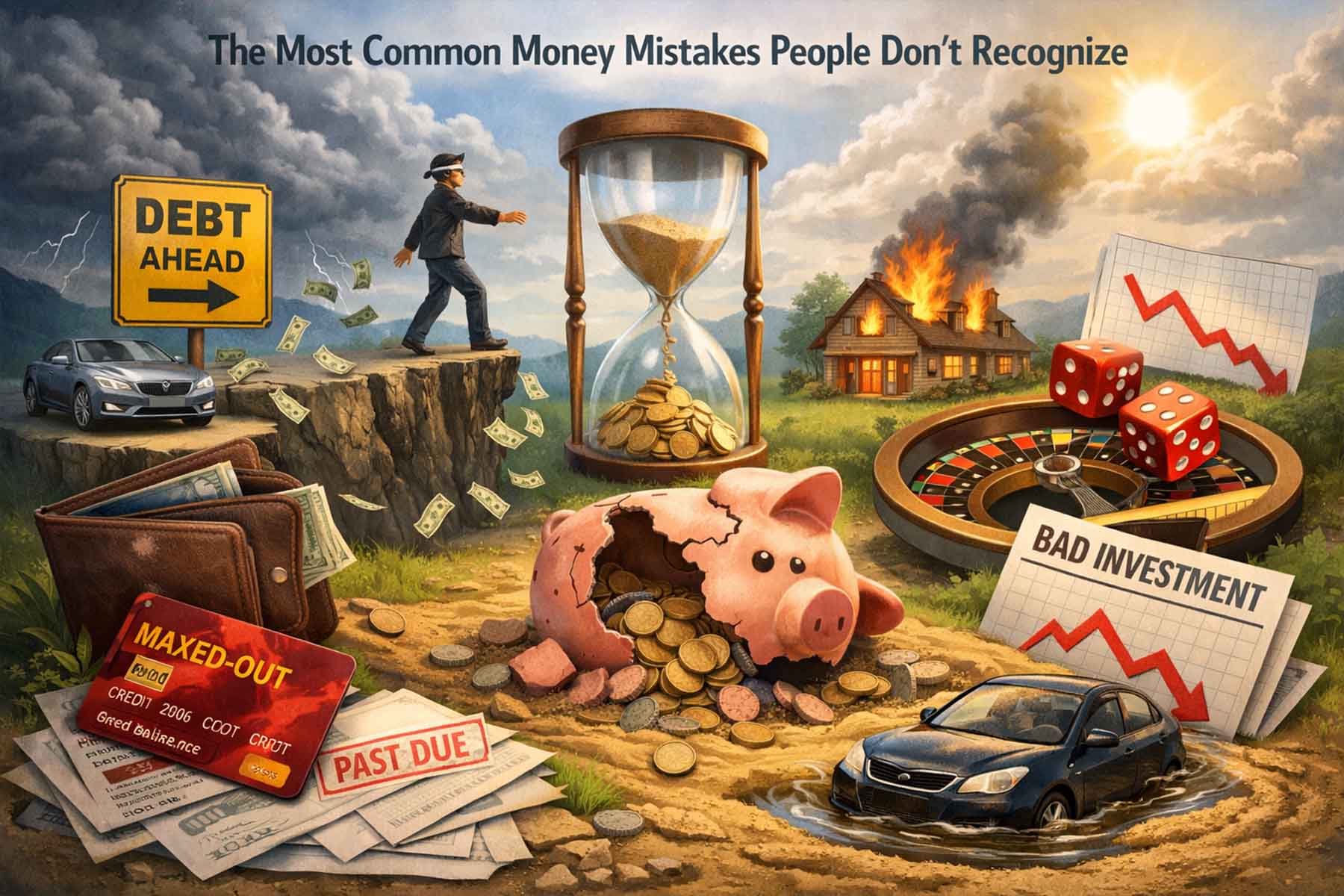
Invest Trand – When people talk about money mistakes, they usually imagine obvious failures. Too much debt. Bad investments. Impulsive spending that ruins a budget. But most financial damage doesn’t come from dramatic moments. It comes from habits that feel normal. Responsible. Even sensible. That’s why the most common money mistakes are rarely recognized as mistakes at all. They don’t look like errors. They look like everyday life. Over time, these quiet patterns shape financial outcomes far more than one or two bad decisions.
Why Common Money Mistakes Are Hard to Notice
Most people don’t make poor financial choices because they lack intelligence or information. They make them because financial behavior is deeply influenced by comfort, routine, and social cues.
When a habit feels familiar, it stops being questioned.
Another reason these mistakes go unnoticed is timing. The consequences of many hidden financial mistakes don’t appear immediately. They surface years later, when it’s difficult to trace the problem back to its source.
This delay creates the illusion that everything is fine — until it isn’t.
Treating “Normal” Spending as Safe Spending
One of the most overlooked personal finance errors is assuming that normal spending automatically means responsible spending. When a pattern feels common, it stops being questioned. What looks ordinary begins to feel safe, even when it quietly puts pressure on long-term finances.
Most people don’t actively decide how much lifestyle spending makes sense for them. They absorb it from their surroundings — coworkers, friends, and increasingly, online lifestyles. Upgrades and small conveniences feel expected, not optional, simply because they are widely practiced.
The problem is that “normal” is a social standard, not a financial one. Spending that feels reasonable in everyday life may still weaken savings, reduce flexibility, and slow real financial progress if it isn’t examined intentionally.
Social Norms Quietly Shape Financial Behavior
People rarely define “reasonable” spending on their own. Instead, they absorb it from friends, coworkers, and online lifestyles. If everyone around you upgrades their phone, drives a newer car, or lives in a more expensive space, it starts to feel expected.
The problem is that social norms don’t account for individual financial realities. Different incomes, job stability, debt levels, and goals get ignored.
What feels socially acceptable may be financially fragile.
Lifestyle Inflation Feels Like Progress
Lifestyle inflation rarely feels like a mistake. It feels earned.
A raise leads to better convenience. Higher income justifies higher standards. Expenses rise quietly alongside earnings, often without resistance.
But when savings don’t increase at the same pace, financial security doesn’t improve. It just becomes more dependent on continued income growth.
This is one of the most common financial behavior mistakes because it hides behind the feeling of advancement.
Underestimating the Impact of Small Financial Choices
Another widespread belief is that only large purchases deserve attention. Because of that, everyday money habits are often dismissed as insignificant. A few small expenses don’t feel like decisions worth thinking about, especially when they don’t immediately disrupt a budget.
The problem is repetition. Small choices made daily or weekly shape cash flow far more than occasional big purchases. Subscriptions, convenience spending, and minor upgrades slowly define how much room is left for saving, investing, or absorbing unexpected costs.
Over time, these small financial choices do more than affect numbers. They influence behavior. Consistently choosing short-term ease over long-term value trains habits that quietly limit financial flexibility, even when income appears stable.
Repetition Matters More Than Size
Small expenses repeated consistently shape cash flow, saving capacity, and financial flexibility. Subscriptions, convenience spending, and minor indulgences rarely cause alarm on their own.
But together, they define how money moves through someone’s life.
More importantly, repeated choices train behavior. Choosing short-term comfort again and again builds a pattern that becomes harder to break.
Small Choices Shape Financial Identity
Over time, people don’t just spend differently — they start to think differently about themselves. Someone who repeatedly avoids saving may begin to see themselves as “bad with money.”
This identity is rarely formed by a single mistake. It grows from hundreds of small decisions that go unexamined.
Confusing Higher Income With Real Financial Progress
Many people assume that earning more automatically solves money management problems. This assumption creates false confidence.
Higher income without discipline often leads to higher spending, not stronger stability. Without systems for saving, planning, and managing cash flow, increased earnings can actually increase financial risk.
Real financial progress comes from control, not just growth. Income helps, but behavior determines outcomes.
Avoiding Financial Decisions Is Still a Decision
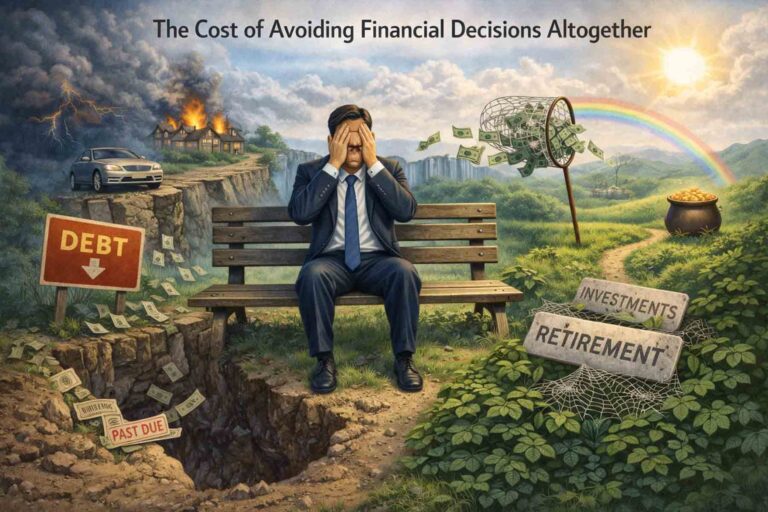
Avoidance is one of the least recognized common money mistakes, largely because it doesn’t look like a mistake. Not checking finances, delaying planning, or postponing decisions often feels safer than taking action, especially when money creates stress or uncertainty.
The cost of avoidance appears quietly over time. Missed opportunities, inefficient choices, and lack of direction slowly weaken financial outcomes. Even when nothing feels wrong in the moment, choosing not to decide still shapes the future — just without intention.
Procrastination Has a Cost
Not budgeting, not investing, or not reviewing finances feels harmless because nothing bad happens immediately. But inaction carries opportunity costs that compound over time.
Missed investment growth, inefficient debt, and lack of planning quietly weaken long-term outcomes.
Emotional Discomfort Drives Avoidance
Money decisions trigger anxiety and uncertainty. Many people delay action not because they don’t care, but because thinking about money feels uncomfortable.
Unfortunately, avoiding discomfort often leads to poorer financial results.
Over-Reliance on Automation Without Awareness
Automation can simplify finances, but blind reliance introduces new financial behavior mistakes.
Automatic payments and transfers reduce friction, but they also reduce attention. Without regular review, people lose awareness of where money goes and whether it still aligns with their priorities.
Automation should support conscious decisions — not replace them.
Awareness Is the Real Financial Advantage
Fixing common money mistakes doesn’t require perfection. It requires awareness.
When people begin to observe their financial behavior instead of running on autopilot, patterns become visible. Habits can be adjusted. Priorities can be clarified.
Financial stability isn’t built by flawless choices. It’s built by noticing small problems early and correcting them consistently.
Conclusion
The most damaging money mistakes rarely announce themselves. They hide inside routines, social expectations, and emotional comfort zones.
Because these behaviors feel normal, they often go unchallenged until financial pressure appears. By then, the damage feels sudden — even though it was built slowly.
Recognizing these patterns gives people back control. Awareness turns automatic behavior into intentional choice. Over time, that shift creates stronger stability, better flexibility, and lasting financial confidence.
Money management isn’t about never making mistakes.
It’s about learning to see them before they quietly shape your future.
Frequently Asked Questions (FAQ)
What are the most common money mistakes people make?
Common mistakes include lifestyle inflation, ignoring small expenses, avoiding budgeting, overspending socially, and confusing higher income with financial progress.
Why do people fail to recognize financial mistakes?
Because many mistakes develop slowly and feel socially normal. Delayed consequences make them harder to detect.
Are small financial decisions really important?
Yes. Repeated small choices shape long-term financial habits and influence overall money management success.
Is earning more money enough to become financially stable?
No. Without proper budgeting, saving, and planning, higher income can increase financial risk instead of reducing it.
How does lifestyle inflation affect finances?
It reduces savings potential and creates dependence on continuous income growth, making finances more fragile.
Is avoiding financial decisions a mistake?
Yes. Delaying planning and investing often leads to lost opportunities and weaker long-term outcomes.
Can automation tools cause money problems?
They can if used without regular monitoring. Automation should support awareness, not replace it.
What is the first step to fixing money mistakes?
Developing awareness of spending patterns, habits, and emotional triggers behind financial behavior.