Invest Trand – Most of us like to believe we’re doing “okay” with money. We pay our bills, we don’t drown in debt, and we follow what everyone around us calls normal money habits. On the surface, that sounds responsible. But here’s the uncomfortable truth we’ve learned over the years: what feels normal is often exactly what keeps our financial options small.
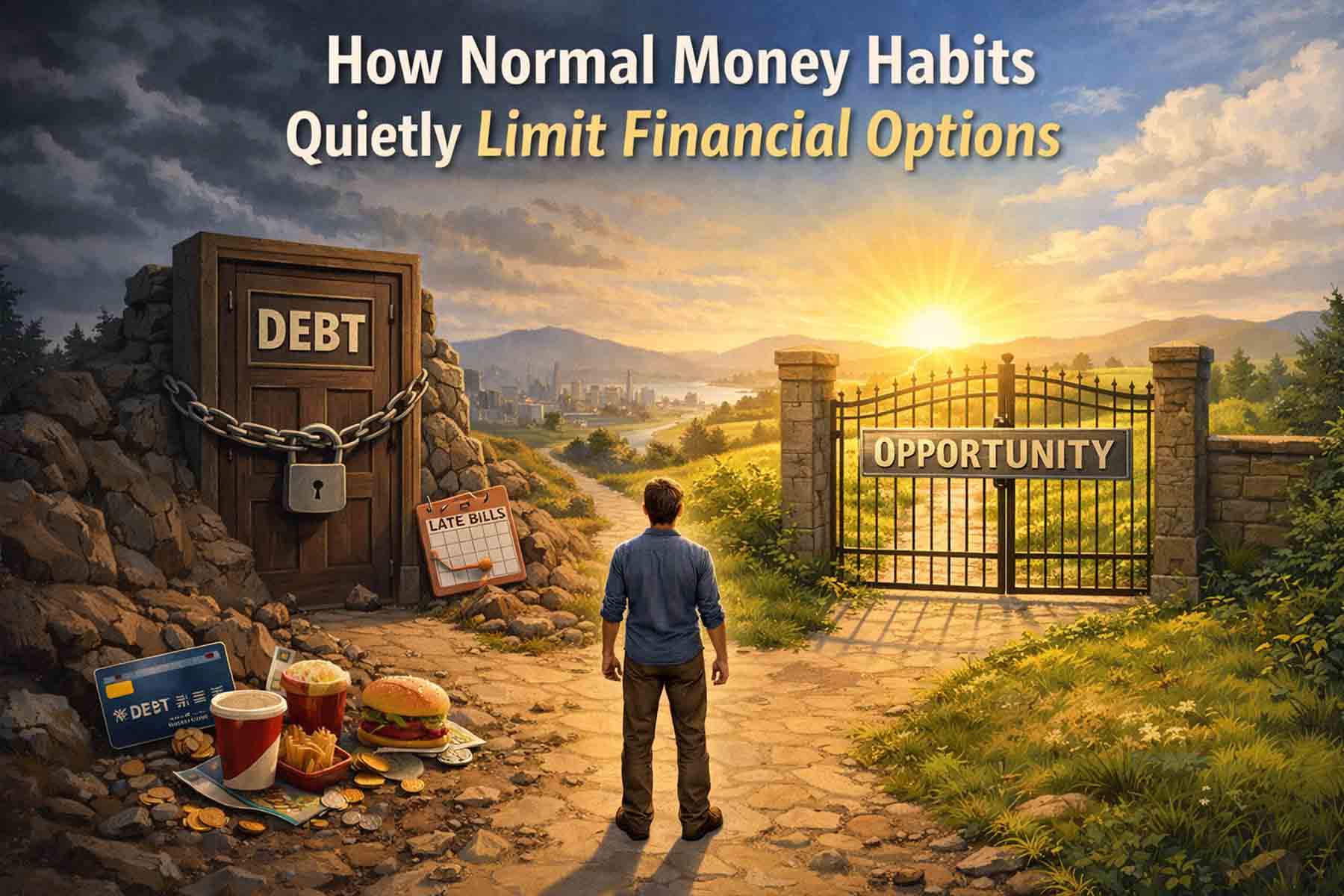
We’re not talking about dramatic mistakes like gambling away your savings or ignoring taxes. We’re talking about quiet, everyday choices—the ones we barely question because “that’s just how people do it.” These habits don’t usually crash our finances. Instead, they slowly narrow what we can choose later: the jobs we can accept, the risks we can take, even the life changes we can afford.
If you’ve ever felt stuck financially without knowing exactly why, this article is for you. We want to explore how normal money habits can quietly limit your options, and more importantly, how you and we together can start seeing money decisions in a more flexible, long-term way.
The Comfort Trap of “Normal” Financial Behavior
One of the biggest problems with normal money habits is that they feel safe. When everyone around you spends in similar ways, saves in similar ways, and talks about money in similar ways, it creates a sense of comfort. We follow patterns without thinking too hard, because standing out feels risky.
But comfort can be expensive. When we only do what’s considered normal, we rarely ask whether it actually serves our future. For example, it’s normal to upgrade our lifestyle as soon as income increases. It’s normal to finance things instead of waiting. It’s normal to treat savings as “whatever is left at the end of the month.”
None of these habits look dangerous on their own. Yet together, they create a financial life that runs on autopilot. And when finances are on autopilot, options quietly disappear. We become less able to handle surprises, less free to change direction, and more dependent on the next paycheck.
The real issue isn’t that these habits are evil. It’s that they’re unexamined. When we don’t question them, we let “normal” decide our future instead of choosing it ourselves.
Spending Patterns That Shrink Your Choices
Let’s talk about spending, because this is where normal behavior does the most hidden damage. Many of us spend first and plan later. We tell ourselves we deserve small rewards, that monthly payments are manageable, and that everyone lives this way anyway.
The problem is not enjoyment. The problem is commitment. Every fixed expense you add—subscriptions, installments, lifestyle upgrades—reduces your room to breathe. It’s like slowly filling a backpack with rocks. Each one feels light at first, but eventually, you wonder why walking feels so hard.
When most of your income is pre-committed, your options shrink. You can’t easily take a lower-paying but more meaningful job. You can’t step back to learn a new skill. You can’t handle a rough patch without stress. We’ve seen this pattern again and again: normal spending creates a fragile financial life.
If you want more options, you and we need to start seeing spending not just as a lifestyle choice, but as a freedom trade-off.
Saving “What’s Left” and Why It Rarely Works
Another classic normal money habit is saving whatever remains after expenses. It sounds logical. After all, you can’t save what you don’t have, right? The issue is that there’s almost never anything meaningful left.
When saving is optional, spending always wins. Life expands to fill the budget. A slightly better meal here, a small upgrade there, and suddenly the month is over. We tell ourselves we’ll save more next month, but next month looks suspiciously similar.
This habit doesn’t just slow down wealth building. It limits your future choices. Without real savings, every decision becomes riskier. Changing careers feels impossible. Starting a business feels reckless. Even taking a proper break feels irresponsible.
We don’t build options with leftovers. We build options by treating saving as a priority, not a side effect.
Debt as a Lifestyle Tool
In many places, debt is no longer seen as a last resort. It’s a normal part of daily life. Credit cards, buy-now-pay-later plans, and long-term financing are everywhere. Used carefully, debt can be useful. Used casually, it becomes a quiet cage.
The danger is psychological. When payments are small and spread out, we stop feeling the real cost. We focus on monthly affordability instead of total impact. Over time, we collect obligations instead of assets.
Every debt payment is a promise your future self has to keep. Too many promises, and your future self has fewer choices. You might earn more, but you’re also more locked in. That’s how normal debt habits turn into invisible walls around your life.
We’re not saying “never use debt.” We’re saying: if you and we want more options, we need to treat debt like a strategic tool, not a lifestyle accessory.
The Illusion of Stability
One of the biggest lies normal money habits tell us is that stability comes from predictability. Same job, same routine, same spending patterns, same financial structure. It feels stable, so we assume it’s safe.
But real stability often comes from flexibility. The ability to adapt, to absorb shocks, to change direction without breaking everything. Ironically, many “stable” financial lives are extremely fragile. A single job loss, a health issue, or a family emergency can cause panic.
When we build our finances around the idea that nothing will change, we’re not being realistic. We’re being hopeful. And hope is not a strategy.
If you want real stability, you and we should aim for optionality: cash buffers, low fixed costs, and skills that travel with us. That kind of stability doesn’t look normal—but it works better.
Why Normal Goals Create Small Futures
Think about common financial goals: buy a house as soon as possible, upgrade the car, aim for a certain lifestyle level, retire “someday.” None of these are bad. But when we chase them without thinking, they can lock us into narrow paths.
A big mortgage can limit career flexibility. A high lifestyle can demand constant high income. A vague retirement goal can delay real action. We end up optimizing for appearances instead of freedom.
Goals shape behavior. If our goals are normal, our results will likely be normal too. And “normal” often means limited choices, slow progress, and a lot of quiet stress.
We don’t need extreme goals. But we do need intentional ones—goals that increase our options, not just our expenses.
Rewriting the Script: From Normal to Intentional
So what do we do with all this? The answer isn’t to reject everything mainstream. The answer is to become more intentional than normal.
We can start by asking better questions:
- Does this expense buy convenience, or does it buy freedom?
- Does this commitment expand my options, or shrink them?
- If my income changed tomorrow, would my life still work?
Small shifts matter. Automating savings before spending. Keeping fixed costs lower than you think you can afford. Treating debt with respect, not casualness. Building buffers before building lifestyle.
None of this is flashy. But over time, these choices compound into something powerful: flexibility.
And flexibility is what turns money from a source of stress into a source of options.
What Financial Freedom Actually Looks Like
Financial freedom isn’t about luxury. It’s about choice. The choice to say no. The choice to wait. The choice to change direction without panic.
When you and we step away from purely normal money habits, we start building a life where decisions are less desperate and more deliberate. We stop asking, “Can I afford this payment?” and start asking, “What does this cost my future options?”
That shift in thinking is quiet, but it’s transformative.
Conclusion
Normal money habits don’t usually ruin lives. They just slowly shrink them. They trade flexibility for comfort, options for routines, and long-term freedom for short-term ease.
The good news is that you don’t need a dramatic overhaul to escape this trap. You and we just need to become more intentional than average. A little more thoughtful about commitments. A little more serious about savings. A little less casual about debt.
Over time, those small differences create a big result: a financial life with room to move, room to breathe, and room to choose.
And in the end, that’s what money should give us—not just stuff, but options.
Frequently Asked Questions (FAQ)
What are “normal money habits”?
They’re common financial behaviors most people follow, like saving what’s left, using debt casually, and upgrading lifestyle with income increases—often without much reflection.
Why are normal habits a problem if they’re common?
Because “common” doesn’t mean “optimal.” Many normal habits quietly reduce flexibility and increase long-term financial stress.
Do I need to live extremely frugally to have more options?
No. The goal isn’t extreme frugality, but intentional spending and lower fixed commitments so your choices stay open.
Is debt always bad?
Not always. Debt can be useful, but when it becomes a lifestyle tool instead of a strategic choice, it often limits future options.
How can I start changing my habits?
Start small: prioritize saving first, question new fixed expenses, and look at every commitment as a trade-off with your future flexibility.
What’s the biggest hidden cost of normal money habits?
The loss of choice. Over time, normal habits can lock you into paths that are hard to change.
What should be my main financial focus instead?
Focus on building flexibility: cash buffers, lower fixed costs, and financial structures that let you adapt when life changes.