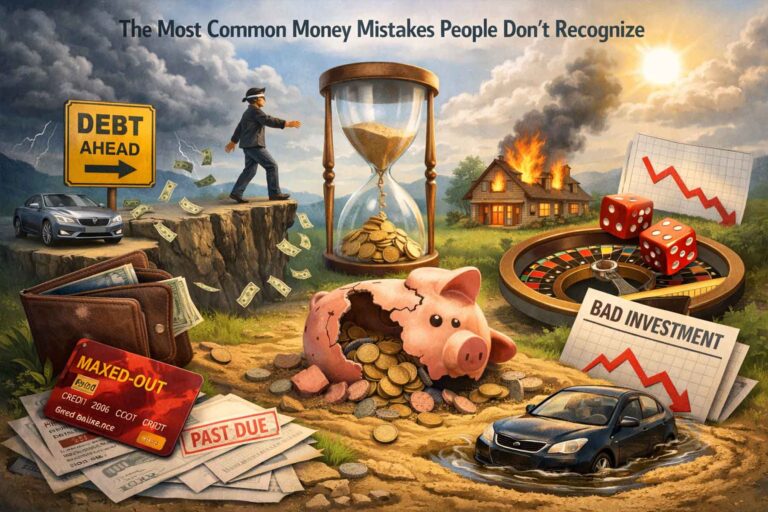
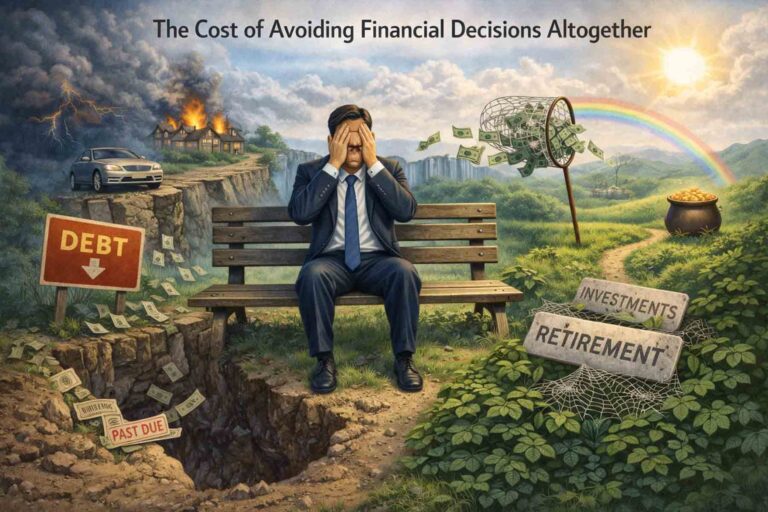
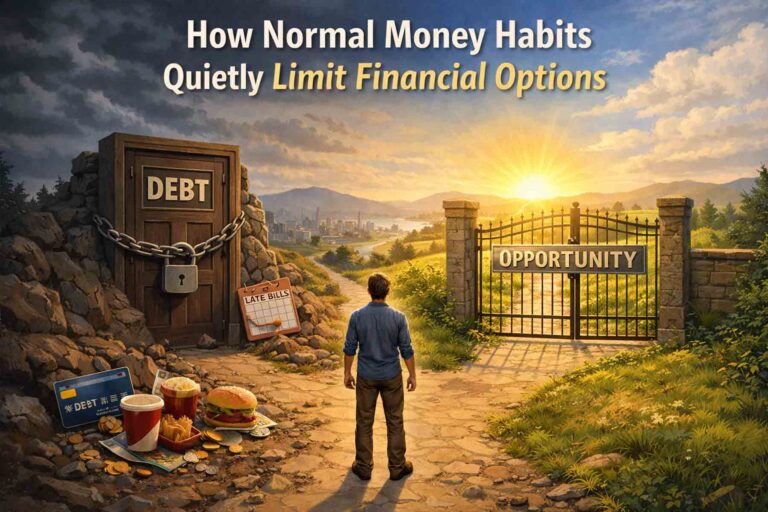
Invest Trand – Playing it safe financially is often treated as a virtue. Staying away from debt, choosing low-risk options, and prioritizing stability sound like the kind of decisions no one would argue against. On the surface, this approach feels mature and responsible. But over time, the same caution can quietly become a financial decision error — not because it protects too little, but because it protects too much.
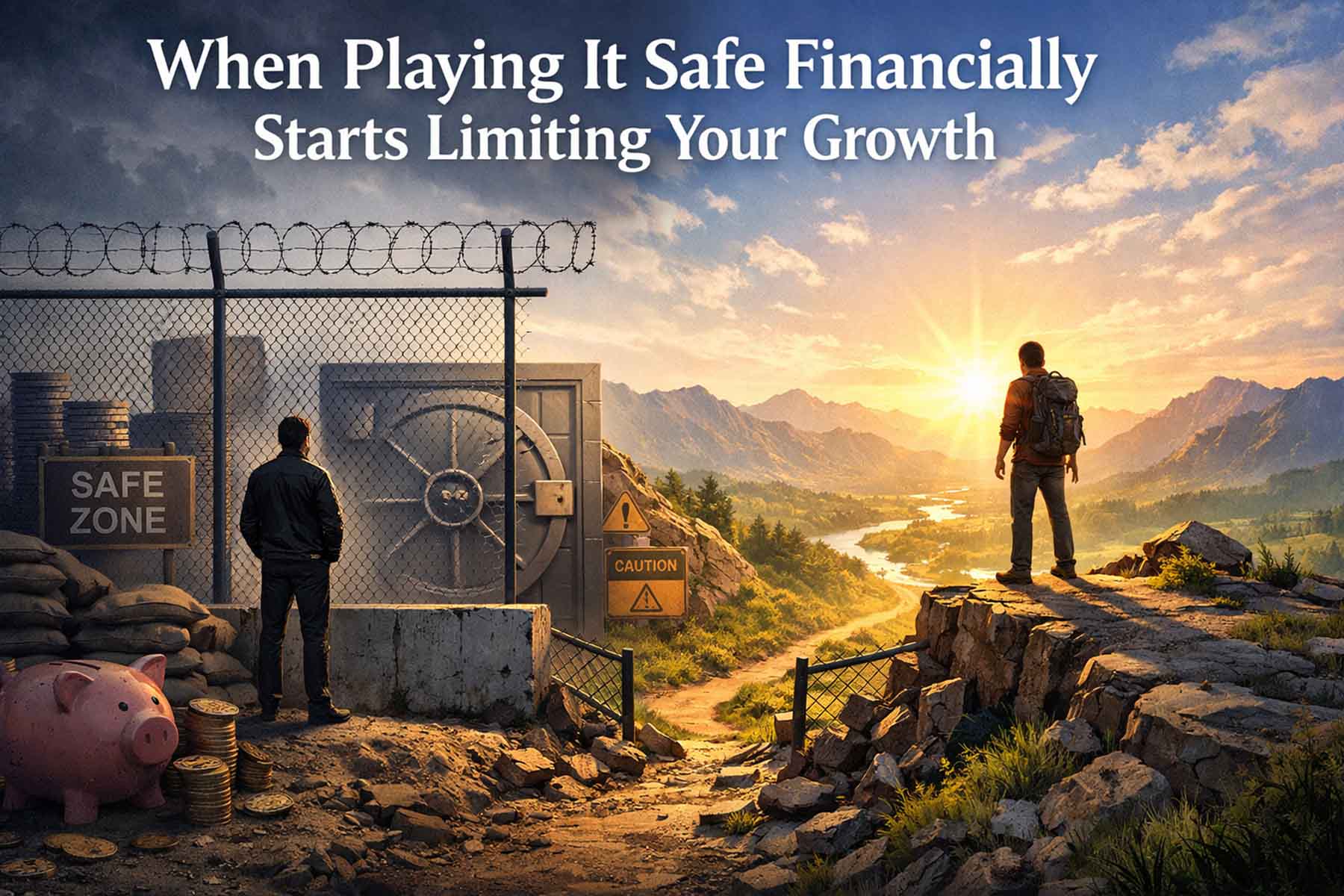
The line between safety and stagnation is thinner than most people realize. Protecting money matters, but refusing to take any calculated risk usually comes with a cost: slower progress, fewer opportunities, and growth that never quite starts. Understanding where caution turns into avoidance is the first step toward building a financial strategy that is not just safe, but also forward-looking.
Why Playing It Safe Financially Feels Comfortable
Playing it safe financially feels comforting for a simple reason: it reduces anxiety in the moment. Uncertainty disappears when choices are predictable. Bills feel manageable, risks feel distant, and there is a sense of control that comes from knowing nothing “bad” is likely to happen soon.
This feeling is reinforced by banks, advisors, and traditional financial advice that often present conservative choices as the responsible default. And in many situations, they are. The problem starts when safety stops being a tool and turns into a rule that is never questioned, regardless of changing goals or circumstances.
Emotional comfort, however, is not the same as long-term security. What feels calming today can quietly limit options tomorrow, especially when decisions are made to avoid discomfort rather than to build sustainable progress.
How Risk Avoidance Becomes a Financial Decision Error
Avoiding risk entirely is not a neutral choice, even though it often feels like one. When people decide to stay on the sidelines, they are still shaping their financial future — just in a quieter way. Money left untouched, plans left undecided, and opportunities left unexplored all push outcomes in a certain direction, even if nothing seems to be happening.
Over time, this kind of avoidance turns into a financial decision error because it replaces deliberate strategy with passive drift. Instead of choosing a path based on goals and trade-offs, decisions are made by fear and discomfort. The result is not safety, but a slow narrowing of options and a growing gap between where someone is and where they actually want to be.
Opportunity Cost Is the Hidden Price of Safety
Every financial decision carries opportunity cost. Choosing ultra-conservative options often means sacrificing potential returns. Over time, this tradeoff becomes significant.
For example, keeping all savings in low-yield accounts may feel secure, but inflation slowly erodes purchasing power. The visible balance remains stable, while real value declines quietly.
Long-Term Goals Require Growth
Major financial goals such as retirement, wealth preservation, and financial independence depend on growth. Excessive caution slows progress and increases the amount of time and effort needed to reach these milestones.
When people avoid growth opportunities, they often compensate later with higher savings pressure or delayed retirement plans.
The Difference Between Smart Risk and Reckless Risk
Not all risk deserves the same reaction, but many people treat it that way. In personal finance, everything that carries uncertainty often gets labeled as “dangerous,” even though the real problem is usually how the risk is taken, not the fact that it exists.
Smart risk is deliberate. It comes from thinking ahead, spreading exposure, and accepting that progress takes time. Reckless risk, on the other hand, is driven by impulse, pressure, or the fear of missing out. The irony is that playing it safe financially often grows out of a fear of reckless risk, but avoiding all risk only replaces one problem with another. The more useful skill is learning to choose risk intentionally, instead of trying to eliminate it altogether.
How Conservative Money Habits Limit Financial Growth
Low-risk money habits often feel like the responsible choice because they make finances look calm and predictable in the short term. There is comfort in seeing stable balances and avoiding volatility, especially when past experiences or uncertainty make security feel more important than progress.
The problem is that stability without movement slowly turns into limitation. When caution becomes the default response to every opportunity, growth has very little room to happen. Over time, this doesn’t just slow financial progress — it quietly reshapes expectations, making modest outcomes feel inevitable rather than optional.
Over-Saving Without Strategy
Saving money is positive, but saving without a plan can become inefficient. Excess cash sitting idle reduces growth potential and weakens long-term financial performance.
Money should have purpose. Emergency funds, investment capital, and short-term savings each serve different roles. Treating all savings the same limits effectiveness.
Delaying Investment Decisions
Many people postpone investing because they fear making mistakes. While caution is understandable, delay often causes greater harm than imperfect action.
Time plays a crucial role in compounding. Waiting too long to participate in growth opportunities shortens the compounding window and reduces long-term potential.
The Emotional Side of Playing It Safe
Financial behavior is rarely driven by logic alone. Emotional experiences strongly influence decision-making.
Past losses, family financial struggles, or negative media coverage can create deep fear around money. This fear encourages people to choose stability at all costs, even when it is no longer rational.
Understanding emotional triggers helps individuals separate real risk from perceived danger. Without this awareness, financial decisions remain reactive instead of strategic.
When Safety Creates Dependency Instead of Security
There is a quiet irony in the way people chase safety. The more they try to eliminate every possible risk, the more fragile their financial situation often becomes. It doesn’t happen overnight. It happens slowly, through choices that seem reasonable on their own but start to form a very narrow and inflexible system.
Relying on a single income source, staying away from diversification, or refusing to adjust a strategy once it feels “safe enough” can look like discipline. In reality, it often creates dependence. When something changes — a job, an industry, an economic cycle — there is very little room to move, and that’s when the sense of security disappears the fastest.
Real security is not about freezing everything in place. It comes from having options, from being able to adapt, and from building a structure that can bend without breaking. Safety should make finances more resilient, not more rigid.
Building a Balanced Financial Approach
The point is not to suddenly become aggressive or reckless with money. Most people don’t need dramatic moves — they need better balance. A solid financial life is built somewhere in the middle, where protection and progress can exist at the same time instead of fighting each other.
That balance usually looks simple on the surface, but it’s powerful in practice. nd just as important, it means checking in on your strategy from time to time, because life changes and plans should change with it.
When these pieces work together, safety stops being a cage and starts becoming a foundation. You’re not just protecting what you already have — you’re giving yourself room to move forward without constantly feeling like one wrong step will undo everything.
Conclusion
Playing it safe financially often feels responsible, but when taken too far, it becomes a financial decision error. Excessive caution limits growth, reduces opportunity, and weakens long-term financial outcomes.
True financial stability is not built through fear-based decisions. It is created by informed risk management, strategic planning, and balanced financial behavior. By learning when safety becomes stagnation, individuals can shift from defensive money habits to proactive financial growth.
Frequently Asked Questions (FAQ)
1. What does playing it safe financially mean?
It usually refers to choosing low-risk options, avoiding investments, and prioritizing stability over growth.
2. Is playing it safe always bad?
No. Safety is important, but excessive caution can limit long-term financial progress.
3. How does inflation affect conservative money strategies?
Inflation reduces purchasing power over time, making low-yield savings less effective for long-term goals.
4. Why do people avoid financial risk?
Fear of loss, past negative experiences, and emotional discomfort often drive risk avoidance.
5. Is investing always risky?
All investments involve risk, but smart risk management can reduce uncertainty and improve outcomes.
6. How can I balance safety and growth?
By maintaining emergency funds, diversifying investments, and using long-term planning strategies.
7. Can being too conservative delay financial goals?
Yes. Excessive caution often slows progress toward retirement and wealth-building goals.
8. What is the biggest danger of playing it too safe?
The biggest risk is stagnation — missing growth opportunities that support long-term financial stability.