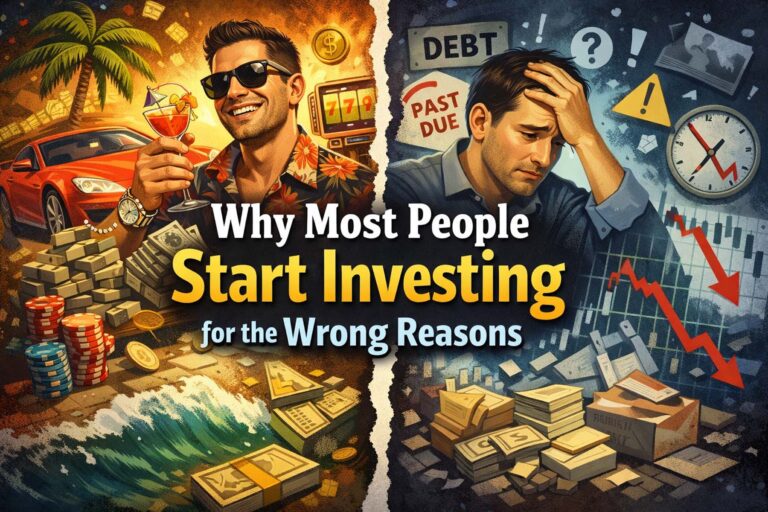
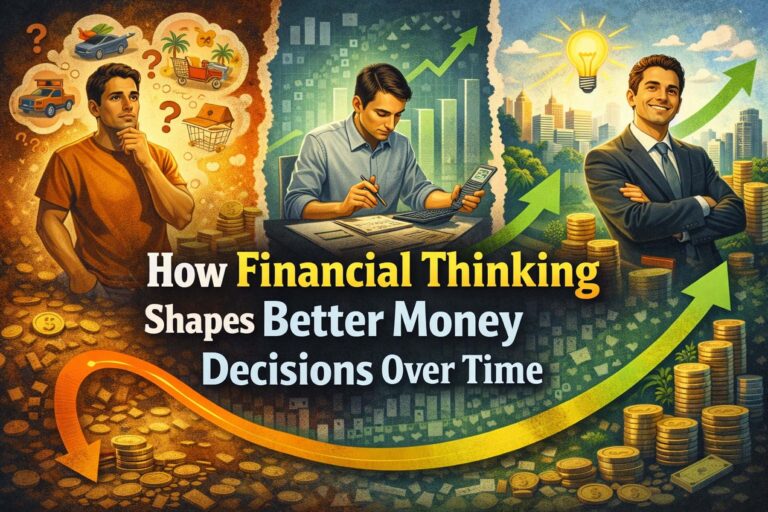
Invest Trand – Modern financial culture rewards speed. News updates arrive instantly, market movements are tracked in real time, and financial advice is often framed around immediate action. This environment makes short-term decisions feel productive and responsible. However, most meaningful financial progress does not come from fast reactions. It comes from consistent behavior built on long-term thinking. While short-term decisions may feel urgent, they rarely shape lasting outcomes. Long-term financial thinking changes how people view risk, success, and progress. Instead of focusing on what happens this week or this month, it emphasizes direction, sustainability, and stability over time.
What Long-Term Financial Thinking Really Means
Long-term financial thinking is not about predicting the future. It is about making decisions that remain reasonable even when circumstances change.
It involves setting priorities that extend beyond immediate comfort or excitement. Instead of asking, “What gives the fastest result?” the focus shifts to, “What supports stability over the next several years?”
This mindset values consistency more than optimization. It accepts gradual progress as a strength rather than a weakness.
Why Long-Term Financial Thinking Is Often Ignored
Despite its importance, long-term financial thinking is difficult to maintain. Human psychology naturally prefers immediate rewards over delayed benefits.
The Appeal of Instant Results
Short-term outcomes provide quick feedback. Seeing immediate gains or visible changes feels motivating. Long-term strategies, by contrast, require patience and trust in the process.
This imbalance makes short-term decisions emotionally satisfying, even when they are financially inefficient. People often choose comfort today over stability tomorrow without consciously realizing it.
How Short-Term Financial Decisions Create Long-Term Problems
Short-term financial decisions are not always harmful. The problem arises when they become the dominant pattern.
When people repeatedly prioritize immediate outcomes, they sacrifice flexibility. Frequent changes in strategy increase transaction costs, emotional stress, and decision fatigue.
Over time, this behavior creates instability. Financial progress becomes inconsistent, and confidence declines because outcomes feel unpredictable.
Long-Term Financial Thinking Improves Money Planning
Long-term thinking changes how people approach planning. Instead of building plans around best-case scenarios, it focuses on realistic assumptions.
Planning for Stability Instead of Perfection
Many financial plans fail because they rely on ideal conditions. Long-term financial thinking accepts that income may fluctuate, expenses may rise, and unexpected events will occur.
By preparing for uncertainty, plans become more resilient. The goal shifts from maximizing returns to maintaining balance and sustainability.
The Relationship Between Patience and Financial Outcomes
Patience is often described as a personal trait. In finance, it functions as a practical advantage.
People who practice long-term financial thinking are less likely to react emotionally to temporary setbacks. They understand that short-term volatility does not define long-term direction.
This patience reduces unnecessary changes and encourages steady behavior. Over time, steady behavior compounds into meaningful progress.
How Long-Term Financial Thinking Reduces Emotional Stress
Financial stress often comes from uncertainty and unrealistic expectations. Short-term thinking amplifies both.
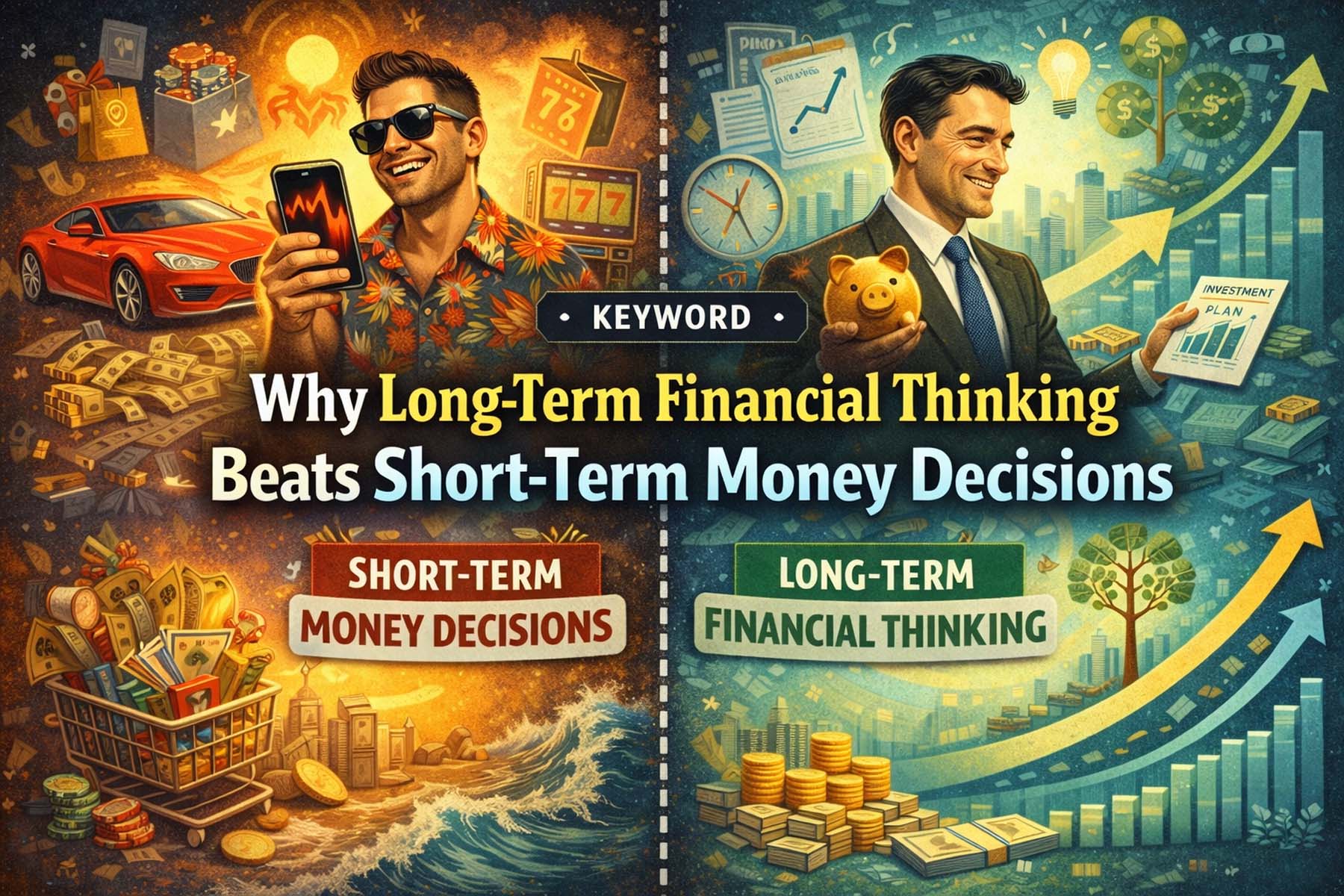
When people constantly monitor outcomes, small changes feel significant. Gains create excitement, losses create anxiety. This emotional cycle becomes exhausting.
Long-term financial thinking smooths this experience. By focusing on broader trends rather than daily fluctuations, emotional intensity decreases. Decisions feel calmer and more deliberate.
Long-Term Financial Thinking and Risk Perception
Risk is unavoidable in financial decisions. What changes is how people interpret it.
Viewing Risk as a Process, Not an Event
Short-term thinkers see risk as a single outcome: success or failure. Long-term thinkers see risk as a continuous process influenced by behavior, diversification, and time.
This perspective prevents overreaction. Instead of avoiding risk entirely or chasing high returns, decisions are evaluated based on probability and sustainability.
Why Consistency Matters More Than Timing
Many people focus on finding the perfect moment to act. While timing can influence outcomes, it is rarely as important as consistency.
Long-term financial thinking emphasizes regular behavior rather than precise entry points. Small, repeated actions often outperform occasional perfect decisions.
Consistency builds habits, reduces emotional strain, and creates momentum. Over time, it becomes more powerful than short-term optimization.
How Long-Term Financial Thinking Shapes Better Habits
Habits form the foundation of financial behavior. Long-term thinking encourages habits that align with stability rather than excitement.
People begin to prioritize budgeting, saving, and reviewing decisions periodically instead of reacting impulsively. These habits create structure and predictability.
As habits strengthen, decision-making becomes easier. Less mental energy is spent on choosing what to do, and more is available for strategic planning.
Long-Term Financial Thinking in an Uncertain Economy
Economic uncertainty is unavoidable. Inflation, job changes, and global events constantly reshape financial conditions.
Long-term financial thinking does not eliminate uncertainty, but it provides a framework to navigate it. Instead of reacting to every change, people evaluate trends and adjust gradually.
This adaptability reduces panic and supports more rational responses during difficult periods.
Why Long-Term Financial Thinking Is a Competitive Advantage
In a fast-paced financial environment, patience becomes rare. Those who maintain long-term perspectives gain an advantage simply by avoiding common mistakes.
They trade less impulsively, plan more realistically, and respond more calmly to uncertainty. Over time, these behaviors compound into better outcomes.
Long-term financial thinking does not guarantee success, but it significantly improves decision quality. It transforms money management from a reactive activity into a strategic process.
Frequently Asked Questions (FAQ)
What is the main benefit of long-term financial thinking?
The main benefit is stability. Long-term financial thinking helps people avoid emotional decisions and focus on sustainable progress instead of short-term results.
Is long-term financial thinking only important for investors?
No. It applies to saving, budgeting, career planning, and debt management. Any financial decision that affects future outcomes benefits from long-term thinking.
How can someone develop better long-term financial thinking?
It starts by setting realistic goals, tracking progress over time, and evaluating decisions based on reasoning rather than immediate outcomes.
Does long-term financial thinking mean ignoring short-term needs?
Not at all. It means balancing present needs with future stability. The goal is not to sacrifice today completely, but to avoid choices that harm long-term security.
Why do people struggle to maintain long-term financial habits?
Because short-term rewards feel more satisfying. Staying consistent requires patience, self-control, and clear priorities.
Can long-term financial thinking reduce financial stress?
Yes. When people focus on direction rather than daily results, they experience less emotional pressure and more confidence in their financial plan.
Is long-term financial thinking effective during economic uncertainty?
Yes. It helps people avoid panic reactions and adjust gradually instead of making drastic decisions during unstable periods.